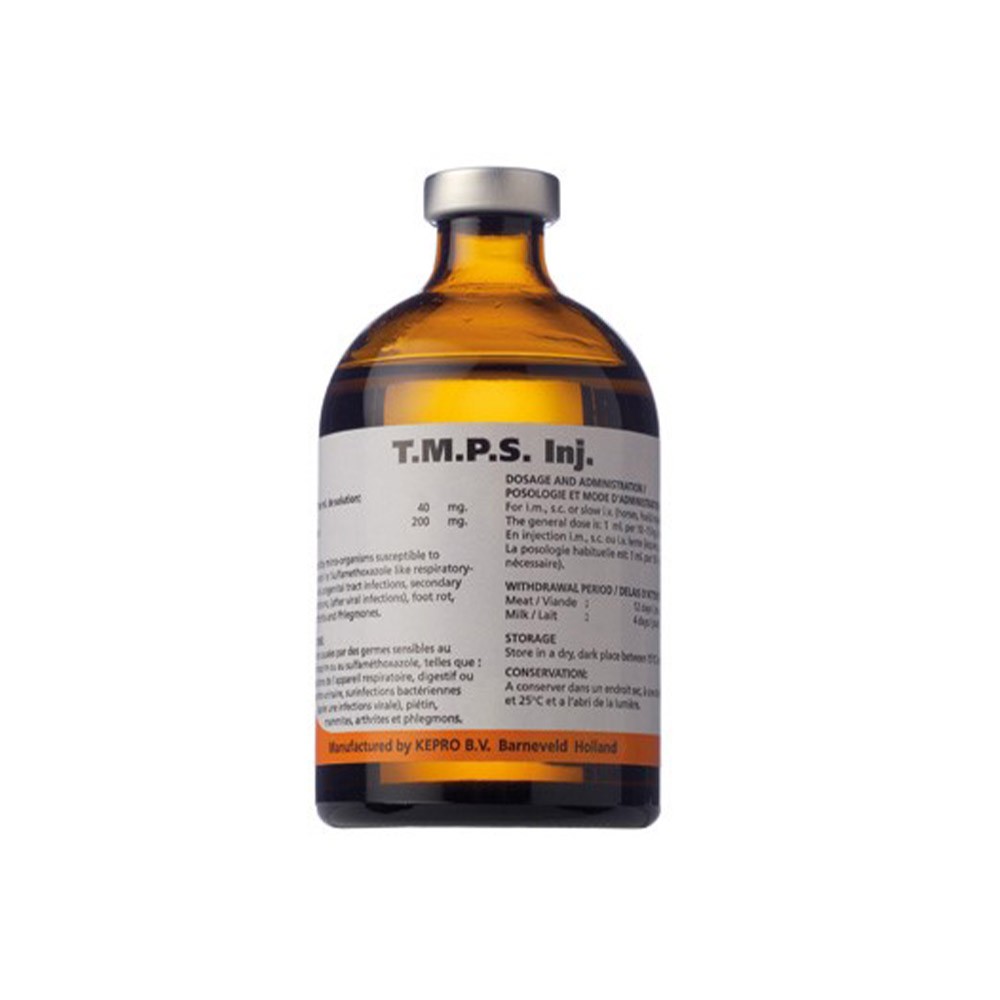
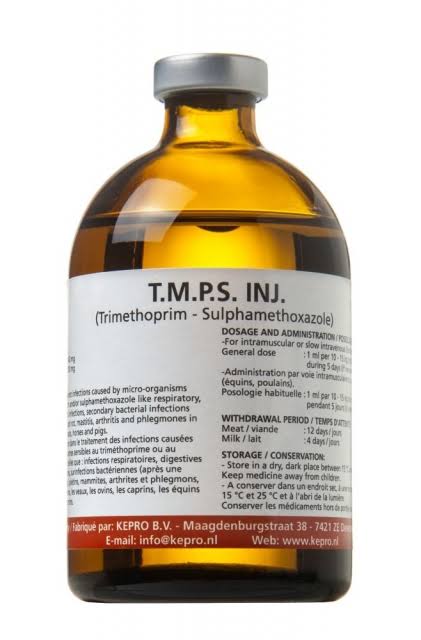
Buy tmps inj online
Original price was: $60.00.$50.00Current price is: $50.00.
The Clinical and Pharmacological Guide to Potentiated Sulfonamide Injections (TMPS) in Veterinary Medicine
Buy tmps inj online, In modern veterinary medicine, especially within equine and livestock health, broad-spectrum antimicrobial therapy requires options that are fast-acting, highly bioavailable, and resilient against bacterial resistance. Among the most trusted parental antimicrobials is the combination of Trimethoprim and a Sulfonamide—most commonly Sulfadiazine or Sulfamethoxazole—collectively known as TMPS Injection (often marketed under clinical names like Tribrissen, Di-Trim, or Trimacare).
Rather than relying on a single mechanism, TMPS utilizes a sophisticated dual-drug strategy. Individually, the components are limited in their killing power, but when combined in the correct biological ratio, they create a synchronized attack on bacterial cells.
This comprehensive technical guide details the pharmacology, exact mechanisms of action, clinical indications, storage requirements, and vital safety considerations for utilizing TMPS injections in veterinary practice.
Chemical Composition and the 1:5 Ratio Dynamics | Buy tmps inj online
An injectable TMPS solution is not a single chemical entity, but a precise mixture of two distinct antimicrobial classes: a diaminopyrimidine (Trimethoprim) and a sulfonamide (most frequently Sulfadiazine).
The Standard Commercial Formulation
In standard commercial preparations, the two active ingredients are formulated in a fixed 1:5 concentration ratio. For example, a standard 24% injectable solution contains:
-
40 milligrams per milliliter of Trimethoprim
-
200 milligrams per milliliter of Sulfadiazine
The Synergy Factor
When either Trimethoprim or Sulfadiazine is used alone, they are typically bacteriostatic, meaning they prevent bacteria from multiplying but do not kill them directly. Without a fully functioning immune system to finish the job, the infection can persist, and bacteria rapidly develop resistance to the single agent.
However, when mixed in the 1:5 ratio, the two compounds act in perfect synergy. Once injected and distributed through the patient’s bloodstream, this formula yields a 1:20 ratio in the animal’s serum. At this level, the interaction transforms the drugs from bacteriostatic to bactericidal—meaning they actively destroy the target bacteria. This synergy dramatically reduces the minimum concentration of the drug required to eliminate pathogens and slows down the emergence of antimicrobial resistance.
Molecular Mechanisms – The Double Folate Blockade
The biological power of a TMPS injection lies in its ability to permanently shut down follicle synthesis (folate synthesis) within bacterial cells. Folate is a core building block required by bacteria to produce purines, DNA, and RNA. Without it, a cell cannot replicate its genetic material and dies.
Mammalian cells are unharmed by this process because they absorb pre-formed folic acid directly from food. Bacteria, however, lack the transport mechanisms to absorb outside folate; they must build it from scratch. TMPS attacks this exact vulnerability using a two-step sequential blockade.
                  Para-Aminobenzoic Acid (PABA)
                                │
                                ▼
         [STEP 1: SULFADIAZINE BLOCKS THIS ENZYME]
                    (Dihydropteroate Synthethase)
                                │
                                ▼
                       Dihydrofolic Acid
                                │
                                ▼
         [STEP 2: TRIMETHOPRIM BLOCKS THIS ENZYME]
                    (Dihydrofolate Reductase)
                                │
                                ▼
                      Tetrahydrofolic Acid
                    (Active Folate for DNA)
Step 1: Sulfonamide Competitive Inhibition
Sulfadiazine shares a remarkably similar chemical structure to Para-Aminobenzoic Acid (PABA), a basic ingredient bacteria use to create folate. Because of this structural similarity, the sulfonamide binds directly to the bacterial enzyme dihydropteroate synthetase, locking out the actual PABA molecules. This stalls the production of early-stage dihydrofolic acid.
Step 2: Trimethoprim Sequential Inhibition
Any small amount of dihydrofolic acid that manages to bypass the first step is immediately met by Trimethoprim. Trimethoprim targets the next enzyme in line, dihydrofolate reductase, which converts early folate into its active form, tetrahydrofolic acid.
By systematically attacking two separate points on the exact same metabolic pathway, TMPS ensures that even if a bacterium manages to escape the first roadblock, it cannot survive the second.
Clinical Indications and Antimicrobial Spectrum
TMPS injections provide reliable coverage against a broad spectrum of both Gram-positive and Gram-negative pathogens. It is highly effective against common veterinary bacteria, including Streptococcus, Staphylococcus, Escherichia coli, Salmonella, and Pasteurella species.
Veterinarians frequently depend on TMPS injections to treat several acute, systemic conditions:
-
Respiratory Infections: Highly useful in treating lower respiratory tract infections, pleuropneumonia, and bacterial secondary infections following strangles (Streptococcus equi).
-
Urogenital Tract Infections: Because both active ingredients are excreted in high concentrations through the kidneys, TMPS is a primary choice for severe bladder, kidney, and prostate infections.
-
Alimentary and Gastrointestinal Tract Infections: Effective at addressing systemic colibacillosis and acute salmonella-induced intestinal infections.
-
Joint, Bone, and Soft-Tissue Vulnerabilities: TMPS penetrates deep into bodily fluids. Following an intravenous injection, drug levels in the synovial (joint) and peritoneal (abdominal) fluids rapidly equal the levels found in the bloodstream, making it excellent for septic arthritis and contaminated wounds.
Reconstitution, Clean Handling, and Chemical Stability
To maintain its chemical integrity and prevent the solution from crystalizing or degrading before administration, TMPS must be handled according to strict clinical storage protocols.
Reconstitution and Liquid Maintenance
Unlike some peptides or fragile vaccines that arrive as a dry powder requiring manual reconstitution, TMPS injections are typically supplied as a ready-to-use, clear yellow liquid solution. However, because it contains highly concentrated sulfonamides, it is physically sensitive to temperature fluctuations and contamination.
-
Sanitization Procedures: Always wipe down the rubber stopper of the multidose vial using a clean 70% isopropyl alcohol swab before inserting a sterile needle.
-
Viscosity Adjustments: TMPS can become thick and sluggish when cold. For an intravenous injection, it is highly recommended to warm the vial gently to normal body temperature by rolling it between your palms before drawing it into the syringe. This lowers the fluid’s viscosity, making a smooth, controlled injection much easier to perform.
Storage and Shelf-Life Guidelines
To stop the active components from separating or precipitating out of the solution, adhere to the following temperature rules:
-
Unopened and Opened Vials: Store the container upright at standard room temperature, ideally between 20 degrees Celsius and 25 degrees Celsius.
-
Avoid Chilling: Never allow TMPS injections to freeze or face prolonged refrigeration. Cold temperatures reduce the solubility of sulfadiazine, causing the drug to form visible, sharp crystals inside the vial. If crystals form at the bottom of the vial, the solution is unevenly mixed, unsafe to inject, and must be discarded.
-
Light Sensitivity: Keep vials enclosed in their original cardboard boxes when not in use. Prolonged exposure to direct UV sunlight speeds up oxidation, which ruins the formula and turns the clear yellow liquid dark brown.
Crucial Administrative Cautions and Adverse Reactions
While TMPS injections are highly safe when handled properly, the drug carries a set of strict administrative boundaries that every practitioner must observe.
1. Intravenous Slow-Dosing Mandate
When treating horses, TMPS must be administered strictly via slow intravenous (IV) injection.
Critical Patient Warning: Fast, rushed IV injections of potentiated sulfonamides have been linked to rare but sudden, fatal cardiovascular collapse. This reaction is believed to be caused by vagal nerve overstimulation or temporary intolerance to the liquid stabilizing agents (excipients) inside the bottle.
To prevent this, the injection should be delivered slowly over a period of 60 to 90 seconds. At the very first sign of patient discomfort, sweating, rapid breathing, or muscle tremors, the injection must be stopped immediately.
2. Guard Against Extravasation
Practitioners must ensure the needle is perfectly seated within the vein before pushing the syringe plunger. If the TMPS solution leaks outside the blood vessel into the surrounding neck tissues (extravasation), the alkaline nature of the drug causes intense local irritation, severe swelling, and potential tissue death. TMPS should never be given via intramuscular (IM) injection in horses for this reason.
3. Avoid Purulent, Pus-Filled Environments
A vital clinical limitation of TMPS involves the chemistry of open wounds and closed abscesses. Abscesses and necrotic (dead) tissues are filled with massive amounts of free PABA and purulent debris.
Because there is so much extra PABA flooding the area, the bacteria can bypass the competitive roadblock created by Sulfadiazine. Therefore, before relying on TMPS, any deep abscesses or pus-filled wounds must be surgically drained and flushed out to lower local PABA levels.
4. Sedative Interactions
TMPS injections should never be given to horses exhibiting drug-induced cardiac arrhythmias, particularly those currently sedated with alpha-two agonists like detomidine, romifidine, or xylazine. Combining these medications can trigger fatal heart abnormalities.
Standard Dosing Frameworks and Healing Timelines
Typical Dose Rate: 15 to 30 milligrams per kilogram of body weight
Standard Frequency: Every 12 to 24 hours
Standard Course: 5 to 7 consecutive days
The Recovery Progression
Because an IV injection puts the medication directly into circulation, the therapeutic effects of TMPS begin immediately:
-
Hours 1 to 4 (Serum Peak): The drug reaches its maximum concentration in the blood, joints, and organs. Free-floating bacteria are hit by the double folate blockade, and their replication stops instantly.
-
Days 1 to 3 (Symptom Remission): Acute symptoms like high fevers, nasal discharge, and elevated white blood cell counts begin to drop sharply as the patient’s immune system clears away the dying pathogens.
-
Days 5 to 7 (Complete Resolution): Treatment should be maintained for a full 48 hours after all external signs of disease have vanished to prevent the infection from returning and to stop any remaining bacteria from mutating.
Frequently Asked Questions (FAQ) About TMPS Injections
1. Why must TMPS injections be given so slowly when administered intravenously?
Rapid intravenous injection can cause sudden cardiovascular shock, altering the animal’s heart rhythm and potentially leading to fatal collapse. This severe reaction is triggered by a temporary intolerance to the liquid stabilizers in the solution or sharp shifts in blood pressure. Delivering the medication slowly over 60 to 90 seconds minimizes this risk.
2. Can I give a horse a TMPS injection in the muscle (IM)?
No. TMPS injections should not be given intramuscularly to horses. The solution is highly alkaline and causes severe local tissue irritation, swelling, muscle damage, and abscess formation at the injection site. It must be administer strictly through clean, slow intravenous injection.
3. What should I do if crystals have form at the bottom of the vial?
If you see crystals settling at the bottom, do not use the vial. Crystallization occurs when the solution is exposed to cold temperatures or refrigeration, causing the sulfadiazine to fall out of suspension. Because the liquid is no longer evenly mixed, injecting it can cause under-dosing or block blood vessels. The vial must be discarded.
4. Why doesn’t TMPS work well in a wound filled with pus or a closed abscess?
Pus and decaying, necrotic tissue contain massive amounts of free PABA (Para-Aminobenzoic Acid) and thymidine. Because sulfadiazine works by competing with PABA, an extreme surplus of PABA allows the bacteria to easily bypass the first metabolic roadblock. Abscesses and pus must be drained and flushed cleanly for TMPS to be effective.
5. Is it safe to use TMPS on a horse that has been sedated?
No, it is highly dangerous to combine TMPS with specific sedatives. You must never inject TMPS if a horse is currently sedated with alpha-two agonists (such as detomidine, romifidine, or xylazine). The combination can trigger severe, potentially fatal cardiac arrhythmias (irregular heartbeats).
6. Can I store my TMPS vial in the refrigerator to keep it fresh?
No. Keep TMPS out of the refrigerator. Prolonged cold temperatures trigger the crystallization process described in question 3. Store the vial upright in a dark, room-temperature environment (between 20°C and 25°C) inside its original box to protect it from light degradation.
7. How quickly does TMPS begin killing bacteria after injection?
TMPS begins working almost immediately. Because it is injected directly into the vein, it bypasses the digestive tract and hits peak therapeutic levels in the bloodstream, organs, and joint fluids within 1 to 4 hours. Rapidly halting bacterial replication.
Summary – Buy tmps inj online
The Trimethoprim-Sulfonamide injection remains a cornerstone of veterinary antibiotic care due to its calculated, multi-stage attack on bacterial life. By engineering a sequential double blockade along the folate synthesis pathway, TMPS effectively transforms two gentle, bacteriostatic agents into a unified, bactericidal weapon.
When administer with proper clinical care—paying close attention to slow IV injection speeds, avoiding cold storage, and keeping away from un-drained pus cavities. TMPS provides rapid, reliable, and deeply effective healing across a broad range of animal species.
Related products
-
Aagent
$60.00Add to cartAagent: Comprehensive Treatment for Infectious Diseases and Inflammatory Conditions Aagent is a potent medication designed for the treatment of infectious diseases caused by both Gram-negative and Gram-positive bacteria. As well as secondary infections associated with viral diseases. With its broad-spectrum action. Aagent provides effective relief from a wide range of bacterial and inflammatory conditions affecting …
-
Buy Sinomox La Injection
Original price was: $50.00.$45.00Current price is: $45.00.Add to cartSinomox LA Injection – Long-Acting Amoxicillin for Veterinary Use Buy Sinomox La Injection is a long-acting amoxicillin injection used to treat a wide range of bacterial infections in animals, including respiratory infections, urinary tract infections, mastitis, skin infections, and wound infections. It is widely used in cattle, sheep, pigs, dogs, and cats. Product Summary …


Top rated products
-
 Buy HYGETROPIN 100iu
$130.00
Buy HYGETROPIN 100iu
$130.00
-
 Buy Ascorbate 100mg
$60.00
Buy Ascorbate 100mg
$60.00
-
 Biosal injection
$40.00
Biosal injection
$40.00
-
 Boldenone For Horses
$45.00
Boldenone For Horses
$45.00
-
 tussionex cough syrup
$230.00
tussionex cough syrup
$230.00
On Sale
-
 Federgold Calcium-Fit 500ml
Original price was: $25.00.$20.00Current price is: $20.00.
Federgold Calcium-Fit 500ml
Original price was: $25.00.$20.00Current price is: $20.00.
-
 De Patagoon Soft Acid IV+ For Sale Online
Original price was: $50.00.$40.00Current price is: $40.00.
De Patagoon Soft Acid IV+ For Sale Online
Original price was: $50.00.$40.00Current price is: $40.00.
-
 Buy ropadiar solution 20%
Original price was: $120.00.$100.00Current price is: $100.00.
Buy ropadiar solution 20%
Original price was: $120.00.$100.00Current price is: $100.00.
-
 Cystorelin for cows
Original price was: $60.00.$50.00Current price is: $50.00.
Cystorelin for cows
Original price was: $60.00.$50.00Current price is: $50.00.
-
 Catosal for horses
Original price was: $60.00.$50.00Current price is: $50.00.
Catosal for horses
Original price was: $60.00.$50.00Current price is: $50.00.