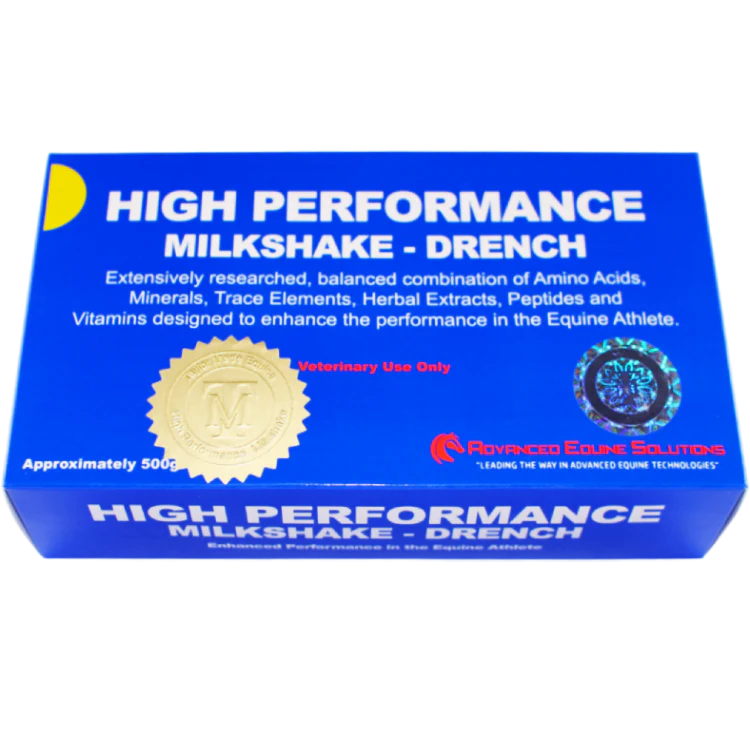
High performance milkshake drench
Original price was: $120.00.$100.00Current price is: $100.00.
High Performance Milkshake Drench is a premium nutritional supplement formulated to help dairy Horse, cattle and cows recover quickly after calving and maintain peak performance during early lactation. This highly palatable drench delivers essential energy, electrolytes, vitamins, minerals, and nutrients that support hydration, rumen function, and overall health when cows need it most.
Designed to combat the challenges associated with calving stress and negative energy balance, High Performance Milkshake Drench helps replenish vital nutrients, encourages feed intake, and supports optimal milk production.
The High-Performance “Milkshake” Drench: Science, Mechanics, and Regulations in Equine Sports Medicine
In the high-stakes world of elite horse racing and endurance sports. Trainers continuously seek ways to delay the onset of muscle fatigue and extend peak power down the homestretch. Among the various metabolic interventions used over the decades. Few have generated as much conversation, research, and regulatory scrutiny as the high-performance “milkshake” drench.
Despite its casual, dairy-sounding nickname, an equine milkshake drench contains no milk or ice cream. Instead, it is a potent, high-volume alkaline solution delivered directly into the horse’s stomach. Its primary goal is to chemically alter the blood’s pH to buffer lactic acid.
This comprehensive guide breaks down the science behind the milkshake drench, its mechanical function inside the horse’s body, the physiological risks involved, and how modern regulatory bodies monitor its use.
What is a “Milkshake” Drench?
In equine sports medicine, a “milkshake” is a slang term for a large-volume oral drench or stomach tube formulation consisting primarily of Sodium Bicarbonate (baking soda) mixed with water.
To maximize its metabolic effects, veterinarians and trainers often supplement the base mixture with other performance-supportive nutrients, including:
-
Glucose or Dextrose: To provide an immediate, easily absorbable carbohydrate energy spike.
-
Key Electrolytes: Potassium chloride, sodium chloride, and magnesium to protect systemic fluid balance.
-
Amino Acids: Such as glycine, glutamine, or branched-chain amino acids (BCAAs) to support cellular protection.
Method of Delivery
Because sodium bicarbonate is unpalatable in massive quantities, horses will not volunteer to drink it, nor can it be safely administered via a standard oral syringe. Instead, a milkshake is administered via nasogastric intubation. A flexible plastic tube is passed through the horse’s nostril, down the esophagus, and directly into the stomach. A high-volume blend—often containing anywhere from 300 to 600 grams of sodium bicarbonate dissolved in several liters of warm water—is then pumped directly into the gastric cavity.
The Core Science: Buffering the “Lactic Burn”
To understand why a milkshake drench is administered, it helps to understand how muscles generate energy during a high-speed sprint.
When a racehorse or performance horse accelerates to maximal velocity, their muscles instantly transition into anaerobic metabolism (burning energy without sufficient oxygen). A mandatory byproduct of this rapid energy production is lactic acid, which dissociates into lactate and hydrogen ions ($H^+$) inside the muscle cells.
                  [High-Speed Anaerobic Gallop]
                                │
                 Lactic Acid Spikes in Muscle Cells
                                │
               Hydrogen Ions (H+) Accumulate Rapidly
                                │
            Muscle pH Drops (Intracellular Acidity)
                                │
     ┌──────────────────────────┴──────────────────────────┐
     ▼                                                     ▼
(Without a Buffer)                                    (With a Milkshake Drench)
  * Muscle enzymes shut down.                          * Alkaline blood acts as a sponge.
  * Calcium transport fails.                           * Draws H+ out of muscles quickly.
  * Stride shortens; acute fatigue.                    * Fatigue is delayed; power sustained.
The accumulation of hydrogen ions causes the internal pH of the muscle tissue to drop from a neutral 7.0 down into acidic territory. This acidity disrupts the calcium channels required for fluid muscle contraction and slows down glycolytic enzymes. Visually, this is the exact moment you see a horse “hit the fatigue wall”—their stride shortens, their muscles tighten, and their speed drops.
The Alkaline Sponge Effect
Sodium bicarbonate ($NaHCO_3$) is a powerful alkalizing agent. When a massive dose is absorbed through the digestive tract into the bloodstream, it raises the blood’s bicarbonate levels, inducing a state of metabolic alkalosis (making the blood more alkaline).
While the bicarbonate ions cannot easily cross directly into the muscle cells themselves, the highly alkaline blood acts like a chemical sponge. It creates a steep concentration gradient that pulls the performance-robbing hydrogen ions ($H^+$) out of the working muscle cells and into the bloodstream at an accelerated rate. By drawing the acid away from the working muscles, the milkshake effectively delays the intracellular drop in pH, allowing the muscle fibers to continue contracting at peak force for a longer period.
Proximity and Timing: When is it Used?
Historically, to achieve peak metabolic alkalosis right at the moment of maximum physical exertion, a milkshake drench was administered 4 to 6 hours prior to a race or heavy breeze.
It takes several hours for the massive volume of sodium bicarbonate to pass from the stomach into the small intestine, clear the portal circulation, and fully elevate systemic blood bicarbonate levels. Once peak absorption is achieved, the buffering window remains highly active for several hours before the kidneys filter out the excess bicarbonate via urine.
Physiological Risks and Dangers of “Milkshaking”
While the mechanical theory behind milkshaking is scientifically sound, the practice carries significant health risks for the equine athlete. These risks are the primary reason the procedure is heavily restricted or banned across global racing jurisdictions.
1. Nasogastric Intubation Risks
Passing a stomach tube in a highly strung, fit performance horse requires skilled veterinary handling. Accidents can happen quickly:
-
Epistaxis (Severe Nosebleeds): The nasal passages of the horse are highly vascular; accidental trauma to the turbinates can cause intense hemorrhaging.
-
Aspiration Pneumonia: If the nasogastric tube is accidentally placed into the trachea (windpipe) rather than the esophagus, liters of alkaline fluid will be pumped directly into the lungs. This is almost universally fatal or career-ending due to severe chemical burning of lung tissue.
2. Gastric Distension and Colic
Introducing large volumes of fluid mixed with highly reactive sodium bicarbonate into the stomach can cause localized irritation, gas bloating, and severe gastric distress, leading to acute colic episodes right before an event.
3. Dehydration and Electrolyte Derangement
An excessive influx of sodium bicarbonate shifts the body’s electrical and fluid balance. To compensate for the massive sodium load, the horse’s body may pull water from tissue spaces into the gut, paradoxically causing intracellular dehydration. Additionally, metabolic alkalosis can cause a dangerous drop in blood potassium and ionized calcium levels, potentially leading to muscle tremors, heart arrhythmias, or “thumps” (synchronous diaphragmatic flutter).
Regulatory Status: The TCO2 Threshold
Because of the clear performance-enhancing potential and the inherent welfare risks associated with pre-race stomach tubing, the administration of a milkshake drench within 24 hours of a race is strictly illegal under virtually all international racing authorities (including the IFHA, FEI, and HISA in the United States).
To enforce this ban, regulatory bodies do not look for the stomach tube itself; instead, they measure the direct chemical consequence of the drench via pre-race blood testing.
+-----------------------------------------------------------------+
|                    THE TCO2 REGULATORY SCALE                    |
+-----------------------------------------------------------------+
| Normal Equine Baseline:         Approx. 28 to 32 mmol/L         |
| International Legal Threshold:  37.0 mmol/L                     |
| Milkshaked/Drenched Levels:     Often Exceeds 39.0 to 42.0 mmol/L|
+-----------------------------------------------------------------+
Total Carbon Dioxide ($TCO_2$) Testing
When blood is collected from a horse in the pre-race holding barn, the laboratory measures the Total Carbon Dioxide ($TCO_2$) levels in the plasma. $TCO_2$ serves as a direct proxy for the amount of bicarbonate circulating in the horse’s system.
-
Standard Legal Limit: Across almost all major racing jurisdictions, the absolute international threshold for $TCO_2$ is set at 37.0 millimoles per liter (mmol/L).
-
The Baseline: A normal, unmedicated horse typically exhibits a baseline $TCO_2$ reading between 28 and 32 mmol/L. The 37.0 mmol/L limit leaves an exceptionally wide margin to account for natural biological variations, dehydration, or legal oral feed supplements.
-
The Penalty: If a horse tests above the 37.0 mmol/L threshold, it indicates intentional administration of an alkalizing agent. The horse is scratched from the race, purse money is forfeited, and the trainer faces significant suspension and fines.
Modern, Legal Alternatives for Lactic Buffering
Because traditional milkshaking is strictly illegal on race day, modern equine sports medicine has shifted toward safe, legal, and non-invasive methods to support muscle pH and energy dynamics.
Trainers look to specific feed ingredients and systemic therapies that help the body manage acid production naturally over time, rather than forcing a massive chemical shift right before a race:
-
Beta-Alanine Supplementation: Beta-alanine is a precursor to carnosine, a natural dipeptide concentrated heavily within fast-twitch muscle fibers. Carnosine acts as an internal cellular buffer against hydrogen ions. Supplementing beta-alanine daily in the feed over several weeks naturally raises muscle carnosine levels without altering blood $TCO_2$.
-
Daily Oral Paste Buffers: Utilizing targeted, balanced amino acid pastes containing L-Aspartate and Glycine supports the urea cycle, assisting the liver and kidneys in clearing ammonia and metabolic waste naturally.
-
Optimal Aerobic Conditioning: The most effective way to delay lactic acid buildup is to improve the horse’s aerobic capacity through progressive interval training. A highly conditioned cardiorespiratory system keeps the horse in the clean-burning aerobic phase longer, reducing the total amount of anaerobic lactic acid produced in the first place.
Frequently Asked Question About High Performace Milkshake Drench.
What is High Performance Milkshake Drench?
High Performance Milkshake Drench is a specialized nutritional supplement designed to support dairy cows during periods of high metabolic demand, particularly around calving and the transition into lactation. The product is formulated to provide a concentrated source of energy, hydration support, electrolytes, vitamins, minerals, and other essential nutrients that help cows recover from calving stress and maintain optimal health.
Fresh cows often experience significant physiological changes after giving birth. During this period, energy requirements increase dramatically while feed intake may decrease. High Performance Milkshake Drench is designed to bridge this nutritional gap by delivering readily available nutrients that support energy balance, rumen function, and overall performance.
By helping cows recover faster and adapt more effectively to the demands of early lactation, this drench can play an important role in dairy herd management programs focused on productivity, health, and profitability.
What are the main benefits of High Performance Milkshake Drench?
High Performance Milkshake Drench offers several important benefits for dairy cattle. One of its primary advantages is providing a rapid source of energy when cows need it most. Following calving, cows often enter a state known as negative energy balance, where energy demands exceed energy intake. Supplementation can help reduce the impact of this challenge.
The product also supports hydration by replenishing fluids and electrolytes that may be lost during calving or periods of stress. Proper hydration is essential for maintaining normal bodily functions, supporting digestion, and promoting feed intake.
Additional benefits may include:
- Enhanced recovery after calving
- Improved appetite and feed consumption
- Support for rumen activity
- Better transition into lactation
- Assistance in maintaining milk production
- Support for metabolic health
- Improved overall well-being and performance
When used as part of a comprehensive herd health program, High Performance Milkshake Drench can help producers optimize the productivity and health of their dairy cows.
When should High Performance Milkshake Drench be administered?
The ideal timing for administration depends on the specific management goals of the farm and the recommendations of a veterinarian or nutritionist. However, the product is most commonly used immediately after calving, when cows are experiencing some of the highest nutritional and physiological demands of their production cycle.
Fresh cows often benefit from nutritional support within the first few hours after giving birth. This is a critical period when the animal is recovering from labor, adjusting to lactation, and coping with increased nutrient requirements.
The drench may also be administered during other periods of stress, including:
- Difficult calvings
- Reduced feed intake
- Transportation stress
- Illness recovery
- Heat stress conditions
- Periods of dehydration
- Early signs of metabolic disorders
Proper timing helps maximize the effectiveness of the product and supports better outcomes for animal health and productivity.
How does High Performance Milkshake Drench support fresh cows after calving?
Calving is one of the most demanding events in a dairy cow’s life. During this period, cows experience hormonal changes, physical exertion, fluid loss, and increased nutritional requirements. Many fresh cows also eat less feed during the days surrounding calving.
High Performance Milkshake Drench is designed to address several of these challenges simultaneously. By supplying energy and nutrients in an easily administered form, the product helps replenish what the cow has lost during labor and supports recovery.
The drench may help:
- Restore hydration levels
- Provide immediate energy support
- Encourage feed intake
- Support rumen activity
- Promote faster recovery
- Improve transition into milk production
Supporting fresh cows during this critical period can help reduce the risk of complications and contribute to improved performance throughout the lactation cycle.
Can High Performance Milkshake Drench help reduce the risk of ketosis?
Ketosis is a common metabolic disorder in dairy cattle that occurs when cows experience a severe energy deficit. During early lactation, milk production often increases faster than feed intake, causing the body to mobilize fat reserves for energy.
While no supplement can completely eliminate the risk of ketosis, High Performance Milkshake Drench may help support energy balance by providing readily available nutritional resources during the transition period.
Proper energy supplementation can assist cows in coping with increased energy demands and may contribute to better metabolic health. The product is often incorporated into transition cow programs that aim to reduce the incidence of metabolic disorders.
Producers should always work closely with their veterinarian to develop a comprehensive ketosis prevention strategy that includes proper nutrition, monitoring, and herd management.
Can High Performance Milkshake Drench improve milk production?
Milk production depends on many factors, including genetics, nutrition, health status, environmental conditions, and overall herd management. High Performance Milkshake Drench is not a direct milk stimulant, but it may help support the conditions necessary for optimal milk production.
When cows recover more effectively after calving and maintain better nutritional status, they are often better positioned to achieve their production potential. By supporting hydration, energy balance, and feed intake, the drench may contribute to improved performance during early lactation.
Healthy cows that transition successfully into lactation are generally more likely to maintain consistent milk production throughout the lactation cycle.
How is High Performance Milkshake Drench administered?
The product is typically administered as an oral drench according to manufacturer recommendations. Proper administration ensures that the cow receives the intended nutritional benefits.
Administration procedures may vary depending on the specific formulation. Some products are mixed with water before administration, while others are supplied in a ready-to-use format.
Farm personnel should always follow label instructions carefully and use appropriate equipment to ensure safe and effective administration.
If there is any uncertainty regarding dosage or administration methods, consultation with a veterinarian or nutrition specialist is recommended.
Is High Performance Milkshake Drench safe for all dairy cows?
High Performance Milkshake Drench is generally intended for dairy cattle and is formulated to support their nutritional needs during periods of increased demand. However, individual animal requirements may vary depending on age, health status, stage of production, and management conditions.
Before introducing any nutritional supplement, producers should review product labeling and consult with their veterinarian if they have concerns regarding specific animals or health conditions.
Animals experiencing severe illness or complications may require additional veterinary care beyond nutritional supplementation.
What ingredients are typically found in High Performance Milkshake Drench?
While formulations may vary, high-quality milkshake drenches commonly contain a blend of ingredients designed to support energy metabolism, hydration, and recovery.
These ingredients may include:
- Energy sources
- Electrolytes
- Vitamins
- Minerals
- Trace elements
- Rumen-supporting nutrients
- Digestive aids
Each ingredient serves a specific purpose in helping support cow health during critical periods. Producers should refer to the product label for the exact ingredient composition and guaranteed analysis.
How should High Performance Milkshake Drench be stored?
Proper storage helps maintain product quality and effectiveness. Most nutritional supplements should be stored in a cool, dry location away from direct sunlight, excessive heat, and moisture.
Containers should remain tightly sealed when not in use to prevent contamination and preserve freshness. Storage areas should also be kept clean and secure to prevent accidental exposure to animals or unauthorized personnel.
Always follow the manufacturer’s storage recommendations and observe any expiration dates listed on the packaging.
Can High Performance Milkshake Drench be used alongside other supplements?
In many dairy operations, nutritional supplements are used as part of a broader herd health and feeding program. High Performance Milkshake Drench may often be used alongside other nutritional products, depending on management objectives and nutritional requirements.
However, it is important to avoid unnecessary duplication of nutrients or excessive supplementation. Working with a veterinarian or nutrition consultant can help ensure that all products complement one another and support overall herd health goals.
A balanced nutritional program remains essential for achieving optimal performance and preventing nutritional imbalances.
How often should High Performance Milkshake Drench be given?
The frequency of administration depends on the specific product formulation, management objectives, and condition of the animal. Some cows may receive a single drench immediately after calving, while others may benefit from additional administrations during recovery or periods of elevated nutritional demand.
Producers should follow manufacturer recommendations and seek professional guidance when developing supplementation protocols.
Overuse or improper use may not provide additional benefits and should be avoided.
Are there any withdrawal periods associated with High Performance Milkshake Drench?
Withdrawal periods depend on the specific ingredients contained in the product. Nutritional supplements generally have different regulatory requirements than medications.
Producers should carefully review product labeling for information regarding milk and meat withdrawal periods. If any uncertainty exists, consultation with the manufacturer or a veterinarian is recommended.
Compliance with all local regulations and food safety requirements is essential for dairy operations.
What signs indicate that a cow may benefit from a drench?
Several situations may indicate that a cow could benefit from nutritional support through drenching.
Common signs include:
- Recent calving
- Reduced appetite
- Decreased feed intake
- Signs of dehydration
- Lethargy
- Stress from transportation
- Recovery from illness
- Difficult calving experiences
- Increased nutritional demands
Early intervention can help support recovery and maintain productivity. Producers should monitor cows closely during transition periods and seek veterinary guidance when health concerns arise.
Why choose High Performance Milkshake Drench over other products?
High Performance Milkshake Drench is design to provide comprehensive support during one of the most critical periods in a dairy cow’s production cycle. Its focus on energy, hydration, nutritional replenishment, and recovery makes it a valuable addition to transition cow management programs.
The product is formulated to help producers address common challenges associated with calving and early lactation while supporting overall herd health and performance.
By investing in proactive nutritional support, dairy operations may improve cow comfort, productivity, and long-term profitability.
For producers seeking a practical solution to support fresh cows and high-producing dairy animals, High Performance Milkshake Drench offers a convenient and effective option for maintaining health and performance when it matters most.
Summary
The high-performance milkshake drench is a historic artifact of sports science that demonstrates just how far trainers will go to influence muscle metabolism. While the physics of using sodium bicarbonate to sponge away muscle acid is chemically accurate. The delivery methods and systemic risks present major welfare concerns for the horse.
With modern testing methods enforcing strict $TCO_2$ limits at the racetrack.ssuccessful trainers rely on superior conditioning. Pristine hoof and joint health, and daily legal nutritional frameworks to give their athletes a winning edge. Shop Now !
Related products
-
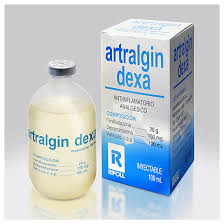
Artralgin Dexa Injectable 100Ml
$230.00Add to cartDescription Buy Artralgin Dexa Injectable 100ml is a veterinary medication combining phenylbutazone, a potent non-steroidal anti-inflammatory drug (NSAID), and dexamethasone, a long-acting glucocorticoid. This combination provides a synergistic effect, enhancing anti-inflammatory and analgesic properties, making it effective in managing both chronic and acute inflammatory conditions of the musculoskeletal system in animals. Artralgin Dexa Injectable 100Ml …
-
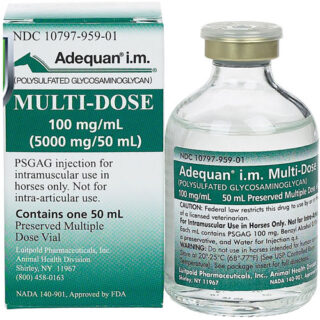
ADEQUAN MULTI-DOSE I.M.
$350.00Add to cartAdequan® Multi-Dose I.M.: Targeted Arthritis Treatment for Equines ADEQUAN MULTI-DOSE I.M. offers a potent solution for equine arthritis, providing targeted relief through intramuscular administration. With its prescription formulation and proven efficacy, it stands as a trusted choice for managing arthritis in horses. Key Features of ADEQUAN MULTI-DOSE I.M. Arthritis Management: Designed specifically for equine use, …
Top rated products
-
 Buy Burnabol 1ml Injection: Uses, Benefits, Dosage, Side Effects & Precautions
Original price was: $60.00.$50.00Current price is: $50.00.
Buy Burnabol 1ml Injection: Uses, Benefits, Dosage, Side Effects & Precautions
Original price was: $60.00.$50.00Current price is: $50.00.
-
 Buy HYGETROPIN 100iu
$130.00
Buy HYGETROPIN 100iu
$130.00
-
 Buy Ascorbate 100mg
$60.00
Buy Ascorbate 100mg
$60.00
-
 Biosal injection
$40.00
Biosal injection
$40.00
-
 Boldenone For Horses
$45.00
Boldenone For Horses
$45.00
On Sale
-
 Federgold Calcium-Fit 500ml
Original price was: $25.00.$20.00Current price is: $20.00.
Federgold Calcium-Fit 500ml
Original price was: $25.00.$20.00Current price is: $20.00.
-
 De Patagoon Soft Acid IV+ For Sale Online
Original price was: $50.00.$40.00Current price is: $40.00.
De Patagoon Soft Acid IV+ For Sale Online
Original price was: $50.00.$40.00Current price is: $40.00.
-
 Buy ropadiar solution 20%
Original price was: $120.00.$100.00Current price is: $100.00.
Buy ropadiar solution 20%
Original price was: $120.00.$100.00Current price is: $100.00.
-
 Cystorelin for cows
Original price was: $60.00.$50.00Current price is: $50.00.
Cystorelin for cows
Original price was: $60.00.$50.00Current price is: $50.00.
-
 Catosal for horses
Original price was: $60.00.$50.00Current price is: $50.00.
Catosal for horses
Original price was: $60.00.$50.00Current price is: $50.00.