The Complete Guide to Polyglycan for Horses: Fluid Restoration and Joint Management
In the world of equine sports medicine, protecting a horse’s joints requires targeted, highly effective therapies. While medications like Adequan (which focuses on rebuilding cartilage matrix) and Legend (which delivers pure intravenous hyaluronic acid) are well-known, Polyglycan occupies a unique and popular category of its own.
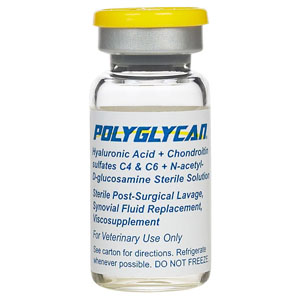
Often described by horse owners as an “all-in-one” joint therapy, Polyglycan is a patented medical device formula that mirrors the exact composition of healthy equine joint fluid. This guide breaks down what Polyglycan is, its powerful three-component formula, how it is used by veterinarians, and how it differs from traditional joint therapies.
What Is Polyglycan?
Polyglycan is a sterile, highly viscous veterinary solution engineered to replace or supplement lost or damaged synovial (joint) fluid in horses.
Unlike standard chemical drugs that rely on metabolic or systemic pathways to block pain pathways, Polyglycan is officially classified as a medical device. It achieves its therapeutic benefits primarily through physical and mechanical means: by directly restoring lubrication, cushioning, and viscoelasticity to a compromised joint space.
The Patented 3-Component Formula
The reason Polyglycan is so highly regarded by performance horse veterinarians is its synergistic, pre-blended formulation. Each standard 10 mL vial contains three essential glycosaminoglycans (GAGs) that naturally mimic the structural elements of healthy equine synovia:
-
Hyaluronic Acid Sodium Salt (50 mg): Directly restores the thick, slippery viscosity of the joint fluid, reducing friction and absorbing mechanical shock during movement.
-
Sodium Chondroitin Sulfate (1000 mg): A major structural building block of cartilage matrix that provides compressive stiffness and helps inhibit destructive enzymes.
-
N-acetyl-D-glucosamine (1000 mg): A precursor molecule that stimulates the horse’s chondrocytes (cartilage cells) and synoviocytes to produce their own natural protective matrix and fluid.
How Polyglycan Works in the Joint
When a joint experiences repetitive athletic trauma, intense exercise, or an orthopedic surgical procedure, the internal environment changes rapidly. The natural synovial fluid thins out, losing its protective cushion. This triggers a destructive loop of friction, heat, and cartilage fraying.
Polyglycan breaks this cycle mechanically and physically:
    [Healthy High-Viscosity Fluid]
                  │
        (Repetitive Stress/Surgery) ──> Fluid Thins / Loses Viscosity
                  │
    [Instill Polyglycan Solution]
                  │
    ┌─────────────┴─────────────┐
    ▼                           ▼
[Viscoelastic Cushioning]   [Protective Shielding]
Friction is reduced         Coats damaged surfaces &
instantly; shock absorbed   delivers cartilage building blocks
-
Viscosupplementation: By introducing the highly viscous solution directly to the joint space, it instantly replaces watery, low-quality fluid with a dense, shock-absorbing barrier.
-
Post-Surgical Lavage: During arthroscopic surgery (such as removing OCD bone chips), the joint is constantly flushed with saline, stripping away the horse’s natural lubricating layers. Introducing Polyglycan as the final flush before surgical closure shields the raw tissue surfaces and prevents immediate post-op stiffness.
Indications: When Is Polyglycan Used?
Veterinarians generally utilize Polyglycan across three main clinical scenarios:
1. Post-Surgical Lavage and Joint Closure
This is the product’s primary on-label application. Following an arthrotomy or arthroscopic surgery, the veterinary surgeon instills Polyglycan into the synovial compartment to replace the fluid lost during the procedure, accelerating the joint’s return to homeostasis (normal internal balance).
2. Viscosupplementation for Chronic Osteoarthritis
For horses suffering from degenerative joint disease (DJD) or chronic stiffness in high-motion joints (like the fetlocks or knees), Polyglycan is used to manually restock the joint’s fluid density, reducing mechanical wear and extending the horse’s competitive comfort.
3. Systemic “Off-Label” Arthrotherapy
Though explicitly labeled for direct instillation into the joint space (intra-articular), Polyglycan has gained massive popularity in the equine industry for intravenous (IV) and intramuscular (IM) administration. Performance horse owners frequently use it systemically as a cost-effective, multi-joint preventative maintenance therapy during intensive training and show seasons.
Administration and Dosage Protocols
Important Notice: Polyglycan is a prescription veterinary product. The route of administration and exact dosage must always be determined by a licensed equine veterinarian.
Intra-Articular (IA) / Post-Surgical Lavage
-
Dose: Typically 2.5 mL to 10 mL per joint, completely dependent on the size of the synovial cavity being treated (e.g., a hock joint vs. a larger stifle joint capsule).
-
Method: Administered directly into the joint space using absolute sterile technique by a veterinarian. Any unused portion of the vial must be discarded immediately to ensure sterility.
Systemic Use (Intravenous / Intramuscular)
When used off-label as a systemic therapy to treat all joints simultaneously:
-
Dose: One full 10 mL vial given in the jugular vein (IV) or deep into a large muscle mass (IM).
-
Frequency: Often administered as a loading series (once weekly for 3 to 4 weeks) or strategically given 24 to 48 hours prior to an intense competitive event to maximize joint lubrication.
Polyglycan Formats Comparison
To accommodate different joints and deployment types, Polyglycan is supplied by Bimeda in three distinct packaging variations:
| Product Format | Volume Per Unit | Hyaluronic Acid | Chondroitin Sulfate | N-acetyl-D-glucosamine | Best Used For |
| Standard Polyglycan | 10 mL vial | 50 mg | 1,000 mg | 1,000 mg | Systemic use (IV/IM) or large joint post-surgical lavage. |
| Polyglycan-HV (High Viscosity) | 2.5 mL pre-filled syringe | 20 mg | 250 mg | 125 mg | Direct intra-articular injection requiring maximum precision and lubrication density. |
| Polyglycan-SA (Single Admin) | 2.5 mL vial | 12.5 mg | 250 mg | 250 mg | Smaller joints, specific localized joint spaces, or small animal veterinary use. |
Comparison: Polyglycan vs. Adequan vs. Legend
Because Polyglycan contains components found in other leading therapies, horse owners often wonder how it stacks up against the two traditional heavyweights of systemic joint health:
-
Adequan (PSGAG): Formulated strictly from polysulfated glycosaminoglycans. Adequan is an FDA-approved drug that acts as a true cartilage matrix builder. It focuses heavily on cellular repair of damaged cartilage surfaces but does not contain raw hyaluronic acid for immediate fluid thickening.
-
Legend (Hyaluronate Sodium): Formulated as a pure, standalone intravenous hyaluronic acid. Legend functions beautifully as a rapid-acting, targeted anti-inflammatory that reduces acute synovitis (joint lining inflammation) and replenishes fluid thinness. It does not contain the structural cartilage building blocks (chondroitin/glucosamine).
-
Polyglycan: Functions as a hybrid mechanical approach. By packing HA, chondroitin, and glucosamine together into a single viscous liquid, it physically supplies the exact recipe of the joint fluid column while delivering structural substrates concurrently.
Storage and Safety Guidelines
-
Refrigeration Required: Polyglycan should be stored refrigerated whenever possible, ideally at temperatures at or below 65°F (18°C). Proper temperature control maintains the structural stability of the GAG chains.
-
Do Not Freeze: Freezing temperatures can permanently fracture the delicate molecular formulation, rendering the solution ineffective.
-
Injection Reactions: When given intramuscularly (IM), the high thickness of the fluid can occasionally cause brief localized muscle soreness or minor swelling at the injection site. Slow, careful administration into warm, relaxed muscle tissue helps prevent this.
The High-Performance Equine Joint Maintenance Calendar: A Strategic Yearly Schedule
Managing the skeletal health of a high-performance horse—whether competing in upper-level eventing, show jumping, dressage, barrel racing, or reining—requires moving away from reactive “damage control” and adopting a proactive, periodized strategy. Just as an athlete’s training schedule is divided into distinct phases (conditioning, peak competition, and rest), their joint therapy regimen should follow a parallel structure.
Mixing medications, biological therapies, and oral supplements haphazardly can be counterproductive and cost-prohibitive. This comprehensive guide outlines a strategic, 12-month joint maintenance schedule designed to optimize performance, protect cartilage, and prolong your horse’s athletic career.
Part 1: The Core Pillars of Your Joint Protocol
Before mapping out the yearly calendar, it is essential to understand where each category of joint therapy fits into a high-performance routine.
       [Oral Supplements] ──────> Daily Nutritional Baseline
       [Adequan (PSGAG)]  ──────> Seasonal Structural Matrix Building (Spring/Autumn)
       [Polyglycan (GAG)] ──────> Targeted Pre-Show Viscosupplementation & Lubrication
-
Oral Nutraceuticals (Daily Baseline): High-quality oral supplements providing Avocado-Soy Unsaponifiables (ASU), glucosamine, chondroitin, and MSM act as a daily nutritional safety net, down-regulating systemic inflammation and providing a steady stream of cartilage precursors.
-
Disease-Modifying Osteoarthritis Drugs (DMOADs – e.g., Adequan): These are structural cartilage repair tools. Administered via an intensive multi-dose loading series, they are used to arrest cartilage degradation and repair microscopic matrix damage before or after a strenuous competitive phase.
-
Hybrid Viscosupplementation (e.g., Polyglycan): Containing hyaluronic acid, chondroitin, and glucosamine in a dense, viscous solution, this behaves as a mechanical lubricant. It is utilized closer to heavy training spikes and competitions to maximize fluid cushioning inside the joint capsules.
Part 2: The 12-Month Periodized Joint Maintenance Schedule
Note: This sample calendar assumes a standard competitive season running from April through October, with a winter downtime phase from November through January. Adjust the months accordingly to match your specific discipline’s regional show season.
Phase 1: Winter Downtime & Recovery (November – January)
Goal: Allow the horse’s mind and body to rest, clear residual systemic inflammation, and lower chemical dependencies.
 NOVEMBER                     DECEMBER                     JANUARY
 ┌───────────────────────────┐ ┌───────────────────────────┐ ┌───────────────────────────┐
 │ * Transition to rest      │ │ * Daily Oral Baseline     │ │ * Mid-Winter Soundness    │
 │ * Discontinue DMOADs      │ │ * Maximize Turnout        │ │   Evaluation & Baseline   │
 │ * Daily Oral Baseline     │ │ * Weight/Hoof Monitoring  │ │ * Farriery Adjustment     │
 └───────────────────────────┘ └───────────────────────────┘ └───────────────────────────┘
-
Oral Supplements: Continue daily administration of your baseline joint supplement (e.g., an ASU/Glucosamine/Chondroitin blend with MSM). Do not discontinue oral supplements during down periods, as keeping a steady state of active ingredients in the tissues helps manage winter stiffness.
-
Injectable Therapies (Adequan/Polyglycan): Discontinue. Unless managing a horse with severe, end-stage arthritis that requires continuous maintenance for basic turnout comfort, this phase should serve as a therapeutic “washout” period.
-
Management Focus: Maximize 24/7 pasture turnout. Low-impact, self-paced movement prevents joint capsules from tightening during cold weather. Work with your farrier to back off aggressive shoeing mechanics, allowing the hoof wall and heel to expand naturally while workload is low.
Phase 2: Spring Conditioning & Base Building (February – March)
Goal: Support the joint structures as exercise intensity increases, building structural resilience in the cartilage matrix before heavy concussion begins.
 FEBRUARY                     MARCH
 ┌───────────────────────────┐ ┌───────────────────────────┐
 │ * Bring back into work    │ │ * Launch Spring Adequan   │
 │ * Daily Oral Baseline     │ │   Loading Series (1-7)    │
 │ * Baseline X-Rays / Vet   │ │ * Introduce targeted      │
 │   Flexion Screening       │ │   Polyglycan at week 4    │
 └───────────────────────────┘ └───────────────────────────┘
-
Oral Supplements: Maintain the daily baseline. Consider adding a pure antioxidant booster, such as resveratrol, to combat oxidative stress as muscle conditioning resume.
-
The Spring Adequan Loading Series (March): This is the ideal window for structural repair. Administer one 5 mL intramuscular (IM) injection of Adequan every 4 days for a total of 7 treatments. Timing this series to conclude right as the competition season begins ensures that the cartilage matrix is fully reinforced and enzyme-shielded before facing heavy show environments.
-
Management Focus: Dedicate at least 15 minutes to walking on a long rein at the start of every ride to warm up the synovial fluid. Schedule a spring veterinary soundness exam; screening flexions and taking baseline digital X-rays or ultrasound images now allows you to pinpoint sub-clinical joint effusion before it manifests as lameness.
Phase 3: Peak Competition & Travel (April – August)
Goal: Maximize joint lubrication, combat the concussive forces of artificial footing, and prevent travel-related joint stiffness.
 APRIL                        MAY - JULY                   AUGUST
 ┌───────────────────────────┐ ┌───────────────────────────┐ ┌───────────────────────────┐
 │ * First Shows of Season   │ │ * Mid-Season Polish       │ │ * Peak Summer Stress      │
 │ * Daily Oral Baseline     │ │ * Daily Oral Baseline     │ │ * Daily Oral Baseline     │
 │ * Monthly Polyglycan      │ │ * Monthly Polyglycan      │ │ * Targeted Pre-Show IV/IM │
 │   Maintenance Begins      │ │   (24-48 hrs pre-show)    │ │   Polyglycan Booster      │
 └───────────────────────────┘ └───────────────────────────┘ └───────────────────────────┘
-
Oral Supplements: Maintain the daily baseline.
-
Polyglycan Maintenance Strategy: Switch focus from cartilage rebuilding to mechanical lubrication. Administer one 10 mL vial of Polyglycan intravenously (IV) or intramuscularly (IM) once a month.
-
Pro-Tip: Time this injection strategically. Give the vial 24 to 48 hours prior to the first class of a major multi-day competition. This ensures peak viscosity and shock-absorption capacity in the joint fluid during the highest physical stress windows.
-
-
Targeted Intra-Articular (IA) Interventions: If your spring vet check revealed localized, advanced degradation (such as moderate lower hock or stifle osteoarthritis), this mid-season window is when veterinarians typically perform targeted joint injections (Corticosteroids combined with Hyaluronic Acid, or regenerative solutions like Pro-Stride or IRAP).
-
Management Focus: High-performance arenas often feature dense, non-slip synthetic footing that transfers intense rotational torque up the horse’s limbs. Use cold-water hosing or ice boots for 20 minutes immediately following heavy workouts to arrest acute micro-inflammation within the joint capsules.
Phase 4: Autumn Championships & End-of-Season Push (September – October)
Goal: Support joints that are fatigued from a long season, manage wear and tear, and transition the horse smoothly toward winter recovery.
 SEPTEMBER                    OCTOBER
 ┌───────────────────────────┐ ┌───────────────────────────┐
 │ * Finals & Championship   │ │ * Season Wrap-Up          │
 │ * Daily Oral Baseline     │ │ * Launch Autumn Adequan   │
 │ * Final Pre-Show          │ │   Loading Series (1-7)    │
 │   Polyglycan Boosters     │ │ * Transition to rest      │
 └───────────────────────────┘ └───────────────────────────┘
-
Oral Supplements: Maintain the daily baseline.
-
Polyglycan: Administer a final targeted booster 24 to 48 hours ahead of your year-end regional or national championship finals.
-
The Autumn Adequan Loading Series (October): As the show season wraps up, the horse’s cartilage has sustained months of micro-trauma. Before turning the horse out for winter rest, run a second 7-dose Adequan loading series (one injection every 4 days). This active clinical cleanup repairs structural matrix deficits from the competition season, preventing chronic, low-grade inflammation from setting in during winter downtime.
Part 3: Cheat Sheet: Yearly Dosage Summary For a 1,100 lb (500 kg) Horse
Keep this protocol breakdown in your tack room or feed office to track your annual horse maintenance purchases and veterinary scheduling:
Part 4: Crucial Compliance Reminders
-
Sterility First: Always ensure the injection site is clean. Scrub the jugular groove (for IV) or neck muscle mass (for IM) thoroughly with 70% isopropyl alcohol and use a fresh, sterile needle for every single injection.
-
Drug Testing & Drug-Free Windows: While therapies like Adequan and Polyglycan are therapeutic substances rather than forbidden masking agents, competition rules (FEI, USEF, AQHA) change frequently. Always consult your sport’s governing rulebook regarding the mandatory withdrawal times for intravenous or intramuscular joint fluid therapies before arriving at a competition venue.
-
Storage Matters: Remember to store your Polyglycan vials in a temperature-controlled environment (refrigerated, but never frozen) to protect the integrity of the delicate glycosaminoglycan chains. Adequan can typically be stored at room temperature, out of direct sunlight.
By adhering to a structured, periodic schedule that shifts from structural tissue repair in the spring and autumn to mechanical fluid lubrication in the summer, you can optimize your medical investments and ensure your performance horse stays comfortable, willing, and sound.
Frequently Asked Questions (FAQs): High-Performance Equine Joint Maintenance
1. Is it safe to use Adequan and Polyglycan at the same time?
While they are often used within the same competitive season, you should not administer them on the exact same day. They have different molecular weights and therapeutic goals. Adequan is an FDA-approved drug that structurally rebuilds cartilage matrix over a 28-day loading cycle, while Polyglycan is a medical device that mechanically lubricates the joint fluid column right before a workload spike. Think of Adequan as reinforcing the highway surface and Polyglycan as reducing the friction of the traffic driving over it.
2. Why should I run a full 7-dose Adequan series instead of just giving a single monthly shot?
The single monthly shot of Adequan is a common practice in many barns, but it is scientifically incorrect and unsupported by the manufacturer’s clinical data.
Adequan’s ability to shut down destructive matrix metalloproteinase (MMP) enzymes and stimulate new collagen synthesis requires achieving a high, steady-state concentration within the joint tissues. The FDA-approved protocol—one injection every 4 days for 7 treatments—is designed specifically to reach that therapeutic threshold. Giving a single monthly injection fails to hit this critical level, essentially wasting the medication.
3. Can I use Polyglycan if my horse has already had corticosteroid joint injections?
Yes, and in fact, they can be highly complementary. Direct intra-articular steroid injections are highly potent tools for wiping out localized, severe joint inflammation (synovitis). However, frequent steroid use can suppress natural cartilage metabolism over time. Using a systemic therapy like Polyglycan or a DMOAD like Adequan helps support the rest of the horse’s joints and extends the window of time needed between direct joint blocks.
4. How close to a competition can I legally give a Polyglycan injection?
This depends strictly on the governing body of your discipline:
-
USEF/AQHA: Intramuscular (IM) and Intravenous (IV) joint fluid therapies generally must be administered at least 12 to 24 hours prior to entering the show ring, and must be declared if administered on-site.
-
FEI: Guidelines are significantly stricter. The FEI enforces a standard 12-hour drug-free window for all non-restricted therapeutic treatments, but some specific injectable formats are completely barred within 48 hours of competition.
Always check your specific association’s current prohibited substances database before configuring your pre-show timeline.
5. Why shouldn’t I stop oral joint supplements during the winter rest period?
Joint tissue metabolism is a slow, continuous process. The active ingredients in high-quality oral supplements (like ASU and chondroitin) take several weeks of daily feeding to build up steady, therapeutic levels within the joint capsule. If you stop feeding them during the winter, those tissue levels drop back to baseline. When you start them back up in the spring, your horse will experience a multi-week protection gap just as their workload begins to intensify.
6. What should I do if my horse gets a hard, hot swelling after an IM Polyglycan injection?
Because Polyglycan is a highly viscous, thick solution, injecting it into a cold or tense muscle can occasionally cause localized tissue irritation, resulting in a minor injection site reaction.
-
Immediate Action: Apply a warm compress to the area for 15 minutes to increase local blood circulation and help dissipate the fluid.
-
When to Call the Vet: If the swelling continues to grow after 48 hours, becomes intensely painful to the touch, or if the horse develops a fever over 101.5°F (38.6°C), contact your veterinarian immediately to rule out a localized muscle abscess.

Top rated
-
 Buy Burnabol 1ml Injection: Uses, Benefits, Dosage, Side Effects & Precautions
Original price was: $60.00.$50.00Current price is: $50.00.
Buy Burnabol 1ml Injection: Uses, Benefits, Dosage, Side Effects & Precautions
Original price was: $60.00.$50.00Current price is: $50.00.
-
 Buy HYGETROPIN 100iu
$130.00
Buy HYGETROPIN 100iu
$130.00
-
 Buy Ascorbate 100mg
$60.00
Buy Ascorbate 100mg
$60.00
-
 Biosal injection
$40.00
Biosal injection
$40.00
-
 Boldenone For Horses
$45.00
Boldenone For Horses
$45.00