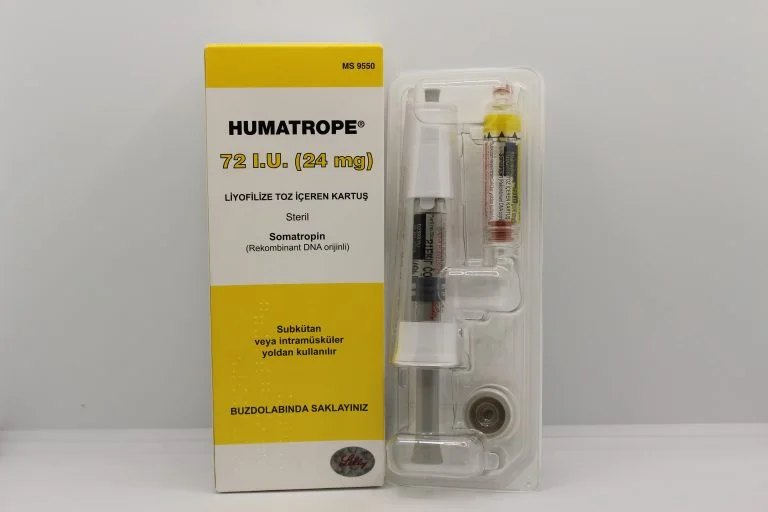
Buy Humatrope Somatropin 72 IU
$300.00
Buy Humatrope Somatropin 72 IU (24 mg) Injection Cartridge
Humatrope Somatropin 72 IU is a highly purified, recombinant human growth hormone (rHGH) synthesized through advanced recombinant DNA technology. Structurally and functionally identical to the endogenous somatropin produced by the anterior pituitary gland, Humatrope comprises a precise 191-amino acid single-chain polypeptide architecture with a total molecular weight of approximately 22,125 Daltons.
The 72 International Unit (IU) configuration—equivalent to 24 milligrams of lyophilized somatropin protein—represents the highest concentration, high-yield cartridge deployment within the Eli Lilly & Co. therapeutic lineup. It is engineered explicitly for seamless integration with the specialized Humatro-Pen® 24 mg delivery system.
This professional master compendium delivers an exhaustive analysis of Humatrope 72 IU, detailing its structural pharmacology, clinical indications, molecular pharmacokinetics, reconstitution mechanics, adverse event mitigation, and strategic market positioning for clinical and pharmaceutical procurement.
SECTION 1: Molecular Architecture and Biochemical Specifications
Humatrope is synthesized utilizing a highly specialized, non-pathogenic laboratory strain of Escherichia coli ($E. coli$) that has been genetically modified by the insertion of the human growth hormone gene.
The primary amino acid sequence of this recombinant protein is identical to natural pituitary-derived human growth hormone. It possesses the exact same sequence of residues along with two crucial internal disulfide bridges: one linking Cysteine-53 to Cysteine-165, and the other linking Cysteine-182 to Cysteine-189. This tertiary folding conformation is absolutely critical for stable receptor-binding kinetics.
Unlike earlier generations of pituitary-extracted growth hormone, which carried severe risks of contaminating pathogens such as Prions (the causative agents of Creutzfeldt-Jakob Disease), the recombinant manufacturing matrix of Humatrope guarantees an ultra-pure, sterile product completely free of human bloodborne elements or viral contaminants.
Complete Quantitative Composition Profile
The 72 IU (24 mg) cartridge is packaged as a dual-chamber or combination kit containing a sterile, white, lyophilized cake of somatropin alongside a highly specialized pre-filled syringe of liquid diluent.
Lyophilized Drug Chamber Components:
-
Active Ingredient: Somatropin — $24.0\text{ mg}$ (equivalent to $72\text{ IU}$ based on a precise specific activity metric of $3.0\text{ IU}$ per mg of pure protein).
-
Tonicity Modifier / Stabilizer: Mannitol — $72.0\text{ mg}$ (essential for structural maintenance of the lyophilized cake and cryoprotection during freeze-drying).
-
Buffering Stabilizer: Glycine — $24.0\text{ mg}$ (prevents structural aggregation and maintains long-term structural integrity).
-
Alkalizing Buffer: Dibasic Sodium Phosphate — $5.43\text{ mg}$ (establishes the ideal physiological pH baseline upon liquid reconstitution).
-
pH Adjusters: Phosphoric Acid and/or Sodium Hydroxide may be introduced during manufacturing to fine-tune the solution parameters.
Accompanying Diluent Syringe Components (3.15 mL Volume):
-
Primary Carrier: Sterile Water for Injection (WFI).
-
Antimicrobial Preservative: Meta-Cresol — $0.3\%$ (allows a extended multi-dose utility window post-reconstitution by preventing microbial proliferation).
-
Isotonic Stabilizer: Glycerin — $0.29\%$ (ensures the final fluid osmolarity perfectly matches human tissue, preventing localized stinging or cellular shock upon injection).
SECTION 2: Comprehensive Clinical Indications and Therapeutic Rationales
Humatrope 72 IU is FDA and globally approved for targeted therapeutic intervention across both pediatric and adult populations suffering from severe somatotropic insufficiency, skeletal growth retardations, or metabolic cachexia.
1. Pediatric Growth Failure Secondary to Growth Hormone Deficiency (GHD)
The primary clinical indication for Humatrope is the correction of severe short stature in pediatric patients showing inadequate endogenous growth hormone secretion.
Without adequate somatropin, the epiphyseal plates (growth plates) of the long bones fail to undergo interstitial chondrocyte proliferation. This can lead to profound dwarfism, metabolic abnormalities, and psychological distress. Left untreated, these patients face a permanent reduction in their final adult height potential.
2. Turner Syndrome (Gonadal Dysgenesis)
Turner Syndrome is a chromosomal anomaly in females characterized by the complete or partial absence of an X chromosome (45,X karyotype). One of the most consistent clinical findings is profound short stature, frequently accompanied by cardiovascular anomalies, webbed neck, and ovarian dysgenesis.
Humatrope therapy is initiated at high pharmacological doses to override genetic growth limitations and drive longitudinal bone acceleration before the closure of epiphyseal cartilage zones.
[45,X Chromosomal Deletion] ──► [Accelerated Epiphyseal Senescence]
                                              │
                                              ▼
[Pharmacological Dose Humatrope] ──► [Sustained Chondrocyte Mitosis] ──► [Normalization of Adult Height]
3. Idiopathic Short Stature (ISS)
Defined systematically as a non-growth hormone-deficient short stature where the height standard deviation score (SDS) is less than or equal to -2.25, and the growth velocity is too slow to achieve a normal adult height.
Humatrope provides these pediatric patients with a significant, predictable increase in linear velocity, provided the epiphyseal plates have not yet fused or sealed.
4. Small for Gestational Age (SGA) with Failure to Catch Up
Indicated for infants born with a birth weight or length below the 3rd percentile for gestational age who fail to exhibit catch-up growth by 2 to 4 years of age.
Humatrope induces prompt metabolic normalization, accelerating lean tissue deposition and skeletal development during early childhood windows.
5. SHOX Gene Deficiency
Short Stature Homeobox-containing (SHOX) gene deficiency occurs via mutations or deletions that cause severe growth retardation, with or without features of Leri-Weill dyschondrosteosis. Humatrope is clinically indicated here to directly compensate for the loss of downstream homeodomain transcription factors within target skeletal tissues.
6. Chronic Renal Insufficiency (CRI)
Pediatric growth failure secondary to chronic kidney disease up to the time of renal transplantation is highly responsive to Humatrope. Chronic uremia induces a state of systemic growth hormone resistance, which can be overcome by administering purified exogenous somatropin.
7. Adult Growth Hormone Deficiency (Adult GHD)
Adult-onset GHD typically results from pituitary adenomas, surgical resection, cranial radiation, or severe traumatic brain injury (TBI). Unlike childhood GHD, adult GHD does not present as short stature, but as a distinct metabolic syndrome:
The Adult GHD Clinical Triad: Increased visceral adiposity (central body fat), severe loss of lean muscle mass (sarcopenia), and diminished bone mineral density (osteopenia/osteoporosis), accompanied by chronic fatigue and impaired lipid profiles.
Humatrope 72 IU acts as a metabolic corrective, systematically reversing these physiological alterations to improve cardiovascular profiles and overall vitality.
SECTION 3: Molecular Pharmacodynamics and Pharmacokinetics
The physiological impacts of Humatrope are mediated through its binding to specific transmembrane Growth Hormone Receptors (GHR), which are highly expressed in hepatic, skeletal, and adipose tissues.
Molecular Signaling Pathway
Upon systemic subcutaneous administration, Humatrope induces GHR dimerization, which activates the intracellular tyrosine kinase Janus Kinase 2 (JAK2). This kinase phosphorylates downstream signaling molecules, primarily the Signal Transducers and Activators of Transcription (STAT5b) pathway.
[Humatrope Binding] ──► [GHR Dimerization] ──► [JAK2 Activation] ──► [STAT5b Phosphorylation] ──► [Hepatic IGF-1 Transcription]
This transcriptional cascade drives the synthesis and systemic release of Insulin-like Growth Factor 1 (IGF-1), along with its primary carrier proteins, IGFBP-3 and the Acid-Labile Subunit (ALS).
Systemic Tissue Actions
1. Skeletal System Dynamics:
Linear growth is driven by IGF-1 stimulating the proliferation and differentiation of pre-chondrocytes within the epiphyseal growth plates of long bones. Concurrently, it increases intracellular accumulation of calcium, upregulates osteoblast activity, and enhances overall bone remodeling cycles.
2. Protein and Lean Tissue Metabolism:
Humatrope enhances cellular amino acid uptake, accelerates ribosomal translation of new proteins, and significantly reduces systemic nitrogen excretion, creating a highly anabolic, positive nitrogen balance.
3. Lipid Catabolism (Lipolysis):
Somatropin acts directly on adipocytes to upregulate hormone-sensitive lipase (HSL) and stimulate beta-3 adrenergic pathways. This accelerates the breakdown of stored triglycerides into free fatty acids, which are then mobilized into circulation for cellular energy production.
4. Carbohydrate Modulation:
Somatropin is a potent antagonist of insulin action. It decreases peripheral glucose uptake in skeletal muscle and upregulates hepatic gluconeogenesis. While this maintains adequate blood glucose levels during fasting, it can lead to hyperinsulinemia or impaired glucose tolerance at high pharmacological doses.
Pharmacokinetic Profile
-
Absorption: Following subcutaneous injection, Humatrope displays an absolute bioavailability of approximately $75\%$. Intramuscular injection yields a slightly lower bio-availability of around $63\%$.
-
Peak Concentration ($C_{max}$): Subcutaneous administration delivers peak serum levels within $3.5\text{ to }5.0\text{ hours}$.
-
Volume of Distribution ($V_d$): Distributed heavily into highly vascularized organs, maintaining a steady-state volume of distribution of approximately $0.07\text{ L/kg}$.
-
Metabolism: Somatropin undergoes extensive protein catabolism via receptor-mediated endocytosis, followed by intracellular lysosomal degradation in both the hepatic and renal parenchymal tissues.
-
Elimination Half-Life ($t_{1/2}$): The systemic half-life of intravenous somatropin is remarkably short ($~0.36\text{ hours}$). However, subcutaneous administration extends the apparent half-life to between $3.8\text{ and }4.9\text{ hours}$ due to prolonged absorption kinetics from the local injection site.
SECTION 4: Mechanical Reconstitution and System Setup
The Humatrope 72 IU (24 mg) cartridge requires precise physical assembly and a systematic reconstitution workflow. Because the tertiary structure of the somatropin protein is fragile, aggressive physical agitation can shear the internal disulfide bridges, rendering the peptide biologically inactive.
Reconstitution Sequence via the Humatrope Diluent Kit
SECTION 5: Clinical Dosing Matrix and Administration Guidelines
Humatrope dosing must be individualized for each patient based on body weight, surface area, and clinical response. It should be administered exclusively via subcutaneous injection, with sites rotated daily to prevent localized lipoatrophy (fat wasting).
Comprehensive Indications Dosing Table
| Target Patient Indication | Recommended Weekly Dosage (mg/kg body weight) | Daily Dose Calculation Example (30 kg Patient) | Injection Timing & Scheduling |
| Pediatric GHD | $0.18\text{ to }0.30\text{ mg/kg/week}$ | $0.77\text{ to }1.28\text{ mg/day}$ (Split into 7 daily doses) | Subcutaneous, nightly before bed |
| Turner Syndrome | Up to $0.375\text{ to }0.40\text{ mg/kg/week}$ | $1.60\text{ to }1.71\text{ mg/day}$ (Requires higher suppression doses) | Subcutaneous, nightly before bed |
| Idiopathic Short Stature | Up to $0.37\text{ mg/kg/week}$ | $1.58\text{ mg/day}$ (Maximize target plate velocity) | Subcutaneous, nightly before bed |
| Small for Gestational Age | Up to $0.47\text{ mg/kg/week}$ | $2.01\text{ mg/day}$ (To optimize catch-up window) | Subcutaneous, nightly before bed |
| Chronic Renal Failure | Up to $0.35\text{ mg/kg/week}$ | $1.50\text{ mg/day}$ (To counter systemic uremic resistance) | Subcutaneous, nightly before bed |
| Adult GHD (Weight-Based) | Initial: $0.006\text{ mg/kg/day}$ | Max: $$0.0125\text{ mg/kg/day$ | $0.18\text{ mg/day}$ to $0.37\text{ mg/day}$ (Aged dependent) | Subcutaneous, nightly before bed |
| Adult GHD (Non-Weight) | Fixed starting dose: $0.15\text{ to }0.30\text{ mg/day}$ | Titrated upward by $0.1\text{ to }0.2\text{ mg}$ increments | Subcutaneous, nightly before bed |
Clinical Protocol Note: Nightly administration is highly recommended because it closely mimics the natural diurnal rhythm of endogenous human growth hormone secretion. Natural pulses peak during deep slow-wave sleep (REM stages 3 and 4), maximizing therapeutic receptor utilization.
SECTION 6: Safety Profile, Absolute Contraindications, and Adverse Event Mitigation
While Humatrope exhibits a well-documented safety profile over decades of global clinical use, its powerful metabolic actions require strict screening and monitoring protocols.
Absolute Contraindications
-
Active Malignancies: Humatrope must be immediately discontinue or never initiated in any patient with an active, uncontrolled neoplasm or intracranial malignancy. Because somatropin stimulates cell proliferation via the IGF-1 pathway, it can act as a mitotic driver for existing malignant cellular structures.
-
Closed Epiphyses: Cannot be used for linear growth velocity in pediatric patients whose epiphyseal plates have completely fused.
-
Acute Critical Illness: Contraindicated in patients experiencing life-threatening complications following open-heart surgery, abdominal surgery, multiple accidental traumas, or acute respiratory failure. Clinical trials show a significant increase in mortality ($42\%\text{ vs. }19\%$) when pharmacological doses of somatropin were introduce in intensive care settings.
-
Active Proliferative Diabetic Retinopathy: High risk of accelerating retinal neovascularization.
Adverse Reactions and Mitigation Strategies
1. Peripheral Edema and Carpal Tunnel Syndrome:
Common in adult populations due to somatropin’s sodium-retaining properties. Fluid retention increases pressure within the carpal tunnel, compressing the median nerve.
-
Mitigation: Reduce the daily dose by $30\text{ to }50\%$ until symptoms resolve, then titrate upward more gradually.
2. Alterations in Glucose Tolerance:
As an insulin antagonist, Humatrope can elevate fasting blood glucose and HbA1c levels.
-
Mitigation: Patients with pre-existing Type 1 or Type 2 Diabetes mellitus must monitor blood glucose levels closely. Their primary antidiabetic medications or insulin regimens may require upward adjustment during therapy.
3. Intracranial Hypertension (Pseudotumor Cerebri):
A rare pediatric adverse event presenting as severe, frequent headaches, visual disturbances, nausea, and papilledema, typically occurring within the first 8 weeks of starting therapy.
-
Mitigation: Perform fundoscopic examinations before initiating treatment and periodically thereafter. If papilledema is confirmed, suspend Humatrope immediately. Therapy can usually be reintroduced at a lower maintenance dose after the intracranial pressure normalizes.
4. Secondary Hypothyroidism:
Somatropin accelerates the peripheral conversion of Thyroxine ($T_4$) to Triiodothyronine ($T_3$), which can unmask subclinical central hypothyroidism.
-
Mitigation: Test thyroid function panels (Free $T_4$ and $TSH$) at baseline and at 3-month intervals. Initiate levothyroxine supplementation promptly if levels drop.
SECTION 7: Stability, Storage, and Cold Chain Integrity
Humatrope contains an un-conjugated protein structure that is highly sensitive to thermal degradation. Maintaining strict adherence to cold chain protocols is essential to preserve therapeutic potency.
-
Un-reconstituted State: Store the dry combination kit in a secure medical refrigerator between $2^\circ\text{C}$ and $8^\circ\text{C}$ ($36^\circ\text{F}$ to $46^\circ\text{F}$). Do not expose to direct freezing temperatures; if the lyophilized cake freezes, the structural matrix of the protein may collapse. Protect from direct ultraviolet light exposure.
-
Post-Reconstitution Utility Window: Once mixed with the provided preserved diluent, the Humatrope 72 IU cartridge is stable for up to 28 days, provided it remains refrigerated between $2^\circ\text{C}$ and $8^\circ\text{C}$. The presence of Meta-Cresol ensures sterility, but the cartridge must be discarded on day 29, regardless of any remaining solution.
-
Travel Mandate: When transporting the Humatro-Pen device containing an active cartridge, a validated insulated medical cold-pack case must be used. Never leave the device in an environment where temperatures exceed $25^\circ\text{C}$ ($77^\circ\text{F}$).
SECTION 8: 2026 Strategic Market Intelligence & Procurement Landscape
For hospital networks, pediatric endocrinology clinics, and compounding pharmaceutical clearings, understanding the commercial availability of Humatrope is critical for effective patient management and formulary planning.
Important Global Manufacturing Discontinuation Notice (December 2026): Eli Lilly & Co. has officially announced the permanent worldwide discontinuation of the Humatrope production line, effective December 31, 2026.
Critical Strategic Implications:
-
Supply Depletion Management: Following the December 2026 cutoff, existing retail and wholesale warehouse stocks will be distributed until remaining global inventories are exhausted.
-
Patient Transition Protocols: Clinical providers must proactively establish transition frameworks to alternative approved recombinant somatropin platforms (e.g., Genotropin, Norditropin, or Omnitrope) to ensure continuous care without therapeutic gaps.
-
Device Legacy Status: The specialize Humatro-Pen 24 mg delivery systems will be phase out alongside the 72 IU cartridge profile, rendering replacement parts unavailable after stock depletion.
Related products
-
Buy tildren for horses
Original price was: $60.00.$50.00Current price is: $50.00.Add to cartAdvanced Treatment for Equine Bone & Joint Health Tildren for horses price. Tildren® (tiludronate disodium) is a bisphosphonate medication designed to treat navicular disease and osteoarthritis in horses. It works by regulating bone metabolism, reducing excessive bone resorption, and alleviating pain associated with degenerative bone conditions. Key Benefits: Tildren for horses price Reduces Bone Pain …
-
Actovegin 400mg
Original price was: $80.00.$70.00Current price is: $70.00.Add to cartCellular Metabolism & Neuroprotective Support Actovegin 400mg is a biologically derived medication used to enhance oxygen uptake and glucose metabolism at the cellular level. Sourced from deproteinized hemoderivative of calf blood, Actovegin is designed to improve cellular energy utilization and promote healing in tissues experiencing oxygen deficiency or metabolic stress. Actovegin is widely use in …
-
BINOCRIT 4000 IU
$150.00Add to cartBinocrit 4000 IU – Epoetin Alfa Injection Binocrit 4000 IU is a high-quality formulation of Epoetin alfa, a synthetic form of human erythropoietin. Erythropoietin is a naturally occurring hormone that stimulates the production of red blood cells in the bone marrow. Binocrit is used in the treatment of anemia, particularly in patients with chronic kidney …
-
Somatropin
$110.00Add to cartSomatropin: Understanding Growth Hormone Therapy for Animals Somatropin is a synthetic form of human growth hormone (HGH), also used in veterinary medicine for specific therapeutic applications. It is primarily employed to promote growth, improve muscle mass, and enhance overall health in animals. Somatropin mimics the action of natural growth hormone, which plays a crucial role …


Top rated products
-
 Buy Burnabol 1ml Injection: Uses, Benefits, Dosage, Side Effects & Precautions
Original price was: $60.00.$50.00Current price is: $50.00.
Buy Burnabol 1ml Injection: Uses, Benefits, Dosage, Side Effects & Precautions
Original price was: $60.00.$50.00Current price is: $50.00.
-
 Buy HYGETROPIN 100iu
$130.00
Buy HYGETROPIN 100iu
$130.00
-
 Buy Ascorbate 100mg
$60.00
Buy Ascorbate 100mg
$60.00
-
 Biosal injection
$40.00
Biosal injection
$40.00
-
 Boldenone For Horses
$45.00
Boldenone For Horses
$45.00
On Sale
-
 Federgold Calcium-Fit 500ml
Original price was: $25.00.$20.00Current price is: $20.00.
Federgold Calcium-Fit 500ml
Original price was: $25.00.$20.00Current price is: $20.00.
-
 De Patagoon Soft Acid IV+ For Sale Online
Original price was: $50.00.$40.00Current price is: $40.00.
De Patagoon Soft Acid IV+ For Sale Online
Original price was: $50.00.$40.00Current price is: $40.00.
-
 Buy ropadiar solution 20%
Original price was: $120.00.$100.00Current price is: $100.00.
Buy ropadiar solution 20%
Original price was: $120.00.$100.00Current price is: $100.00.
-
 Cystorelin for cows
Original price was: $60.00.$50.00Current price is: $50.00.
Cystorelin for cows
Original price was: $60.00.$50.00Current price is: $50.00.
-
 Catosal for horses
Original price was: $60.00.$50.00Current price is: $50.00.
Catosal for horses
Original price was: $60.00.$50.00Current price is: $50.00.