Buy Premoxil 550 Online
$80.00
Reliable Antibiotic for Effective Infection Management
SHOP NOW
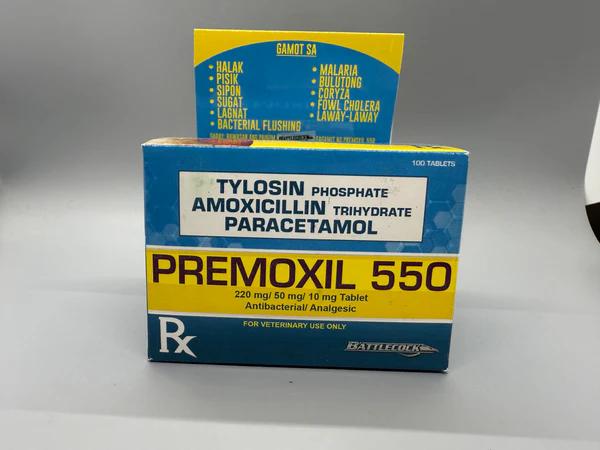
Premoxil 550 is a prominent, specialized veterinary medication specifically formulated for poultry and gamefowl. It stands out in avian care as a multi-action formula designed to combat tough bacterial infections while managing localized pain and inflammation. Shop Now
The Formula: How it Works
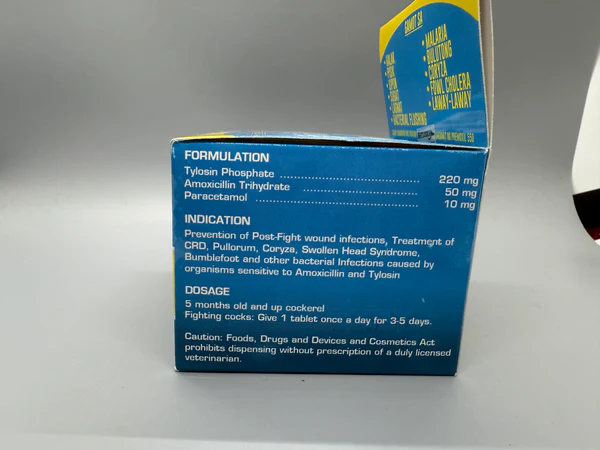
What makes Premoxil 550 unique is its three-pronged composition. It combines two powerful, synergistic antibiotics with an over-the-counter pain reliever to hit pathogens and symptoms simultaneously:
-
Tylosin Phosphate : A macrolide antibiotic that targets the internal protein synthesis of bacteria. It is highly effective against respiratory pathogens, particularly Mycoplasma.
-
Amoxicillin Trihydrate : A broad-spectrum beta-lactam antibiotic that aggressively attacks and breaks down bacterial cell walls.
-
Paracetamol : An analgesic (pain reliever) and antipyretic (fever reducer). It helps soothe the animal, manages physical stress, and targets pain stemming from injuries or infections.
Primary Indications
Veterinarians and yard managers typically utilize Premoxil 550 to treat a variety of severe respiratory, systemic, and structural issues in birds:
-
Chronic Respiratory Disease (CRD): Rattling, coughing, and breathing difficulties usually triggered by Mycoplasma strains.
-
Infectious Coryza & Swollen Head Syndrome: Bacterial flare-ups causing facial swelling, watery eyes, and nasal discharge.
-
Pullorum Disease: Severe intestinal infections caused by Salmonella pullorum.
-
Bumblefoot: Deep, localized bacterial infections in the pads of the feet.
-
Post-Injury Care: Prevention of localized bacterial infections in skin and muscle tissue following physical wounds or trauma.
Standard Dosage & Administration
-
Target Group: Cockerels and adult gamefowl (typically 5 months of age and older).
-
Standard Routine: 1 tablet, administered orally once a day, for a consecutive period of 3 to 5 days.
The Empty Stomach Advantage: Administering the tablet early in the morning before the bird’s first feeding ensures maximum, rapid absorption of the active antibiotics without food interfering with bioavailability in the gut.
Crucial Care Reminders
-
Never Shorten the Treatment Window: Even if the bird looks completely active and symptom-free by day 2, you must finish the full 3-to-5-day course. Stopping early leaves the strongest bacteria alive to mutate, potentially fostering antibiotic resistance.
-
Post-Antibiotic Gut Reset: Because broad-spectrum combinations can inadvertently wipe out beneficial intestinal microflora, it is highly recommended to follow up the treatment course with a 3-to-5-day regimen of water-soluble probiotics and electrolytes to quickly restore digestion and nutrient absorption.
Frequently Asked Questions (FAQ)
1. Why do birds often get watery or loose droppings right after finishing an antibiotic course?
Antibiotics cannot tell the difference between harmful bacteria and the beneficial microflora living naturally inside a bird’s digestive tract. As the medication clears out the infection, it also sweeps out the friendly bacteria that help absorb water and digest nutrients. Without these microbes, the gut becomes temporarily inflamed, leading to watery droppings.
2. Can I use Apple Cider Vinegar (ACV) at the exact same time as my probiotic powder?
It is generally best to separate them into distinct phases, as outlined in the 5-day protocol. While a mildly acidic environment helps good bacteria thrive long-term, mixing highly concentrated ACV directly into the same waterer with a fresh probiotic powder can sometimes shock or reduce the viability of the live cultures in the water vessel before the bird drinks them.
3. Why must the probiotic water be dumped and remade every 24 hours?
Premium recovery powders use clean sugars (like dextrose) as a carrier to help the vitamins and minerals dissolve cleanly. If left standing in a pen for more than 24 hours—especially in warm weather—these sugars will ferment and begin breeding wild, harmful environmental bacteria, turning a helpful supplement into a health hazard.
4. How can I tell if the bird’s gut microflora has successfully recovered?
You will see clear physical markers of recovery across three main areas:
-
Droppings: The stool will firm up cleanly, lose its watery ring, and return to a normal brown/grey color with a solid white uric acid cap.
-
Appetite: The bird’s daily feed consumption will steadily increase as its digestive enzymes bounce back.
-
Alertness: The bird will drop its feathers back into a tight, slick profile and regain its bright, active energy.
5. Is it safe to deworm my birds immediately after they finish their antibiotics?
No. Avoid deworming during the immediate 5-day recovery window. Both antibiotics and dewormers place stress on the bird’s liver, kidneys, and intestinal lining. Forcing a bird to pass dead parasites while its gut is still stripped of its protective microflora can cause a severe physical setback. Always let the gut completely stabilize first.
6. What kind of water should I use to mix recovery supplements?
Always use cool, clean, unchlorinated drinking water. High levels of chlorine in municipal tap water can act as a mild sanitizer, which can inadvertently kill off the delicate, live probiotic cultures in your recovery powder. If your tap water is heavily chlorinated, let it sit out in an open bucket for 24 hours to let the chlorine gas dissipate before mixing.
7. Why do recovery powders contain dextrose or other simple sugars?
When a bird’s intestinal lining is stripped by antibiotics, it loses its ability to easily break down and absorb complex grains. Dextrose provides an immediate source of clean cellular energy that requires almost zero digestive effort to absorb, keeping the bird’s strength up while its gut tissue heals.
Related products
-
Depo Medrone
$50.00Add to cartDepo Medrone: Long-Acting Injectable Corticosteroid for Horses, Cats, and Dogs Depo Medrone is a potent corticosteroid formulated for long-acting relief in horses, cats, and dogs. With its active ingredient Methylprednisolone acetate, it effectively treats various musculo-skeletal conditions, allergic reactions, inflammatory disorders, and autoimmune diseases. Key Features of Depo Medrone : Long-Acting Relief: Depo Medrone provides sustained …
-
AL Namoos
$50.00Add to cartDescription AL Namoos Crowning Podium is a versatile veterinary product designed to address various needs in animals. It serves as an intra-muscular analgesic, offering relief from pain while providing additional benefits for renal health and overall well-being. Key Benefits of AL Namoos: Analgesic Relief: AL Namoos Crowning Podium acts as an effective analgesic, providing relief …
-
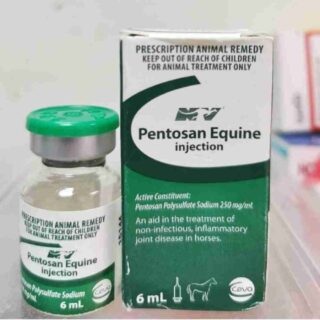
Pentosan Gold For Horses
$50.00Add to cartPentosan Gold: Advanced Joint Treatment Solution for Horses Pentosan Gold is a sterile solution specially formulated to aid in the treatment of noninfectious inflammatory joint disease in horses. It serves as a valuable aid in addressing various conditions such as osteoarthritis, osteochondritis dissecans (OCD), and traumatic joint and periarticular inflammation. Key Features : Comprehensive Treatment: …
-
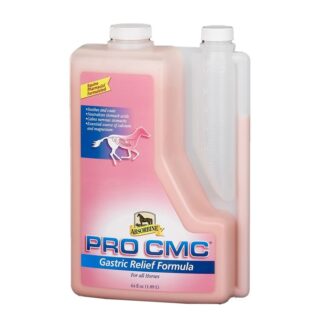
Buy Absorbine Pro CMC Gastric Relief Formula
$150.00Add to cartAbsorbine Pro CMC Gastric Relief for All Horses: Comprehensive Gastric Health Solution Buy Absorbine Pro CMC Online, Gastric Relief is specifically formulated to support the gastric health of horses. This premium product helps to calm nervous stomachs and relieve gastric distress by providing a protective coating that soothes the stomach lining and neutralizes stomach acid. …


Top rated products
-
 Buy HYGETROPIN 100iu
$130.00
Buy HYGETROPIN 100iu
$130.00
-
 Buy Ascorbate 100mg
$60.00
Buy Ascorbate 100mg
$60.00
-
 Biosal injection
$40.00
Biosal injection
$40.00
-
 Boldenone For Horses
$45.00
Boldenone For Horses
$45.00
-
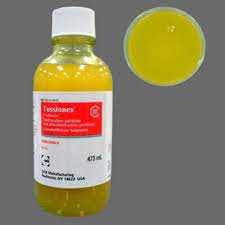 tussionex cough syrup
$230.00
tussionex cough syrup
$230.00
On Sale
-
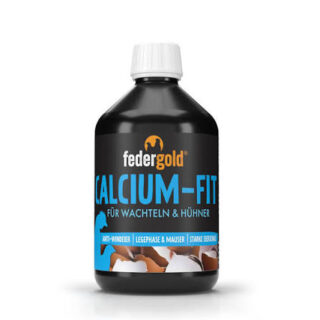 Federgold Calcium-Fit 500ml
Original price was: $25.00.$20.00Current price is: $20.00.
Federgold Calcium-Fit 500ml
Original price was: $25.00.$20.00Current price is: $20.00.
-
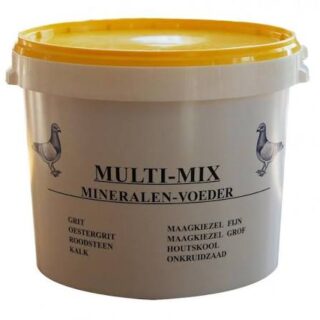 De Patagoon Soft Acid IV+ For Sale Online
Original price was: $50.00.$40.00Current price is: $40.00.
De Patagoon Soft Acid IV+ For Sale Online
Original price was: $50.00.$40.00Current price is: $40.00.
-
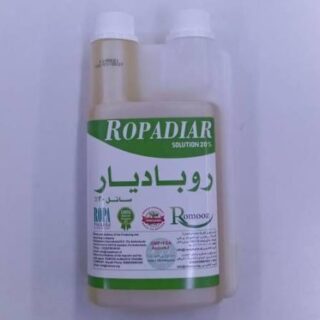 Buy ropadiar solution 20%
Original price was: $120.00.$100.00Current price is: $100.00.
Buy ropadiar solution 20%
Original price was: $120.00.$100.00Current price is: $100.00.
-
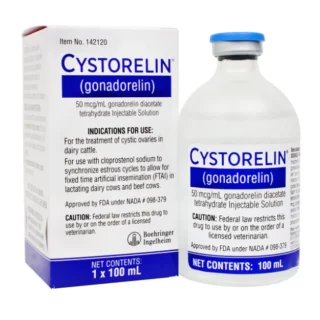 Cystorelin for cows
Original price was: $60.00.$50.00Current price is: $50.00.
Cystorelin for cows
Original price was: $60.00.$50.00Current price is: $50.00.
-
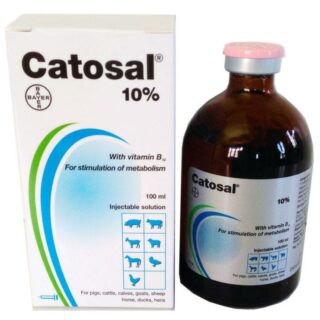 Catosal for horses
Original price was: $60.00.$50.00Current price is: $50.00.
Catosal for horses
Original price was: $60.00.$50.00Current price is: $50.00.