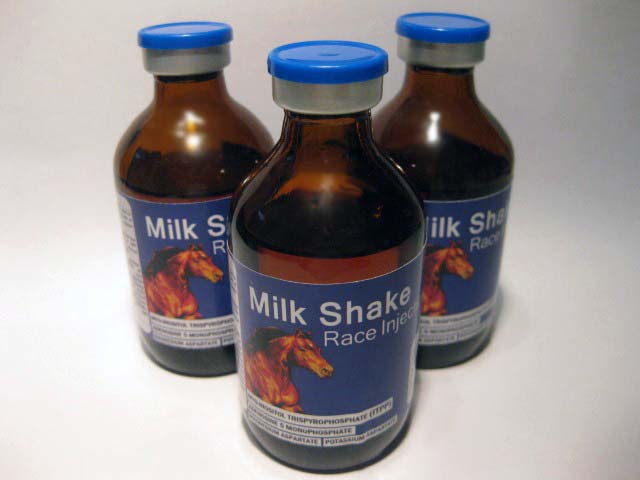
Milk Shake Race Injections
Original price was: $60.00.$50.00Current price is: $50.00.
Guide to Milk Shake Race Injections.
Milk Shake Race Injection. In the high-stakes industries of Thoroughbred, Standardbred, and camel racing, the margin between a podium finish and obscurity is measured in milliseconds. To bridge this gap, trainers have long turned to physiological interventions aimed at delaying fatigue.
Among these, the “Milk Shake”—or pre-race alkalizing injection/drench—remains one of the most talked-about, tightly regulated, and deeply misunderstood performance interventions in racing history.
As regulatory bodies implement advanced $TCO_2$ (Total Carbon Dioxide) testing protocols, understanding the exact science, metabolic pathways, and legal thresholds of milkshaking is vital for veterinary professionals, owners, and regulatory handlers. This definitive pillar guide breaks down everything you need to know about Milk Shake race protocols.
What is a “Milk Shake” Race Injection?
Despite the innocent name, a racing “milkshake” contains no dairy or syrup. Historically, it refers to a concentrated blend of sodium bicarbonate (baking soda), glucose, electrolytes, and water.
In modern veterinary pharmacology, the concept has evolved into commercially manufactured, ultra-purified Milk Shake Injections and drenches. These contemporary formulas replace raw baking soda with complex alkalinizing agents, amino acids, and Krebs cycle substrates designed to maximize cellular energy conversion.
The Ingredients Inside Modern Formulas:
-
Alkalinizing Agents: Sodium bicarbonate, sodium acetate, sodium citrate, or tris-buffer.
-
Krebs Cycle Intermediates: Aspartates, pyruvate, and Co-Enzyme Q10 to stimulate cellular energy ($ATP$).
-
Amino Acid Buffers: Carnosine, Beta-Alanine, and L-Glutamine to protect muscle tissue from micro-tears.
-
Oxygenation Factors: Inosine and specific bio-peptides designed to maximize $VO_2$ max (maximal oxygen consumption).
Mechanism of Action: The Fight Against Lactic Acid
To understand why milkshaking works, we have to look at how an elite animal’s muscles generate energy during a high-velocity sprint.
When a horse or camel hits peak exertion (above its aerobic threshold), its cells can no longer supply oxygen fast enough to fuel the muscles via standard pathways. The body switches to anaerobic metabolism.
[High-Intensity Sprint]
          |
          v
[Anaerobic Glycolysis]
          |
          v
[Accumulation of Lactic Acid (H+ Ions)]
          |
          v
[Drop in Muscle pH (Acidosis)] ———> [Muscle Fatigue & Deceleration]
This anaerobic process yields a critical byproduct: lactic acid, which instantly dissociates into lactate and hydrogen ($H^+$) ions. The accumulation of these hydrogen ions causes the intracellular environment of the muscle to become highly acidic (dropping the pH). This drop in pH interferes with muscle contractions, causes extreme burning fatigue, and forces the animal to slow down.
The Carbonate Buffering Shield
A Milk Shake injection intentionally induces temporary metabolic alkalosis—safely elevating the pH and bicarbonate levels of the bloodstream.
Because the blood is made highly alkaline, it creates a steep pH gradient between the highly acidic muscle cells and the surrounding extracellular fluid. This gradient pulls the fatigue-inducing hydrogen ions out of the working muscles and into the bloodstream at an accelerated rate.
The Performance Reality: A milkshake does not make an animal run faster than its genetic peak. Instead, it extends the duration for which the animal can maintain its absolute maximum velocity before fatigue sets in.
Efficacy: Does It Actually Work?
The efficacy of bicarbonate loading depends entirely on the distance and duration of the race.
Because it targets anaerobic breakdown, it provides almost zero performance benefit in short, explosive sprints lasting under 60 seconds (where the animal relies purely on stored phosphocreatine reserves).
Where It Impacts Performance:
-
Standardbred Racing (1 Mile): This is the sweet spot. The sustained sprint of a one-mile harness race matches the exact timeline where lactic acidosis causes maximum fatigue.
-
Thread-Distance Thoroughbred Racing: For races longer than 6 furlongs (and especially over a mile), blood lactate concentrations reach massive levels. Alkalinizing buffers provide a proven statistical advantage in the final stretch.
-
Camel Endurance Racing: In multi-kilometer camel races, continuous accumulation of metabolic waste can be modulated using multi-day low-dose protocols to improve stamina.
The $TCO_2$ Testing Protocol & Regulations
Because milkshaking provides a definitive physiological advantage, it is banned on race days across all major global racing jurisdictions, including the International Federation of Horseracing Authorities (IFHA) and the Horseracing Integrity and Safety Authority (HISA).
How Pre-Race Testing Works
To catch illicit pre-race administration, regulatory veterinarians conduct blood tests roughly 4 to 6 hours before post time to measure Total Carbon Dioxide ($TCO_2$) levels.
| Baseline/Threshold Type | TCO2 Concentration Threshold | Regulatory Interpretation |
| Normal Baseline Horse | $32.0 – 33.0\text{ mmol/L}$ | Natural physiological range. |
| The Lasix “Bump” | $34.0 – 35.0\text{ mmol/L}$ | Elevated, but common if Furosemide was administered. |
| International Threshold | $36.0 – 37.0\text{ mmol/L}$ | The Legal Limit. Anything above this triggers an automatic scratch and disqualification. |
| Uncapped Milkshaked Level | $39.0 – 45.0\text{ mmol/L}$ | Definite pre-race intervention detected. |
The Clearance Window
Because modern manufactured Milk Shake injections contain varying weights of active sodium citrate, sodium acetate, or tris-buffers, clearance times can vary. For traditional nasogastric tubed drenches, peak $TCO_2$ levels are reached 3 to 5 hours post-administration, with levels remaining elevated for up to 12 to 18 hours. To safely pass regulatory testing, all performance alkalinizing products must be halted at least 24 to 48 hours before competition.
Risks, Safety, and Veterinary Concerns
When administered out of competition as a legitimate post-work recovery tool, alkalinizing agents help restore electrolyte balance. However, improper pre-race administration carries significant clinical risks.
1. Nasogastric Tubing Trauma
Traditional milkshaking requires passing a flexible hose through the animal’s nose, down the esophagus, and directly into the stomach to dump gallons of fluid. If performed by an untrained handler, there is a severe risk of placing the tube into the trachea (windpipe) instead. Pumping fluid into the lungs causes immediate, catastrophic, and often fatal aspiration pneumonia.
2. Severe Gastrointestinal Distress
Dumping massive amounts of highly alkaline salts into the stomach neutralizes gastric acids instantly, causing a violent release of carbon dioxide gas. This can result in severe bloating, loose droppings, diarrhea, and colic—which completely neutralizes any potential performance benefits.
3. Masking Other Prohibited Substances
From a regulatory standpoint, milkshaking is frequently scrutinized because the massive influx of sodium induces diuresis (increased urine output). Historically, unscrupulous trainers used this effect to dilute the animal’s urine, attempting to flush out or mask the presence of other prohibited agents like analgesics or stimulants. Modern blood testing for $TCO_2$ has effectively closed this loophole.
Administration Protocols (Out-of-Competition Recovery Only)
To comply with international clean-sport guidelines, Milk Shake injections and drenches must only be use during training phases as a recovery and cellular-hydration asset, never on race day.
Related products
-
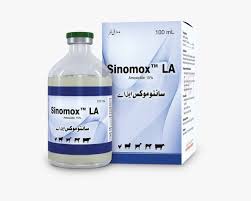
Buy Sinomox La Injection
Original price was: $50.00.$45.00Current price is: $45.00.Add to cartSinomox LA Injection – Long-Acting Amoxicillin for Veterinary Use Buy Sinomox La Injection is a long-acting amoxicillin injection used to treat a wide range of bacterial infections in animals, including respiratory infections, urinary tract infections, mastitis, skin infections, and wound infections. It is widely used in cattle, sheep, pigs, dogs, and cats. Product Summary …
-
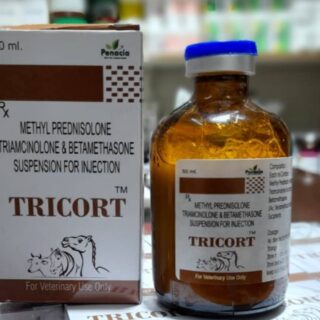
Buy Tricort 40 Injection Online
$45.00Add to cartTricort 40 Injection: Effective Steroid Treatment for Pain and Inflammation Buy Tricort 40 Injection online is a long-acting corticosteroid formulated for intra-articular or intramuscular administration. It provides potent anti-inflammatory, immunosuppressive, and anti-allergic effects, making it a reliable choice for managing various inflammatory and autoimmune conditions. Its slow-release mechanism ensures sustained therapeutic action, reducing the frequency …

Top rated products
-
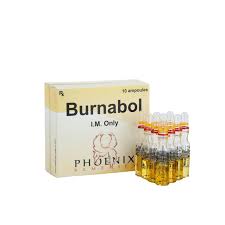 Buy Burnabol 1ml Injection: Uses, Benefits, Dosage, Side Effects & Precautions
Original price was: $60.00.$50.00Current price is: $50.00.
Buy Burnabol 1ml Injection: Uses, Benefits, Dosage, Side Effects & Precautions
Original price was: $60.00.$50.00Current price is: $50.00.
-
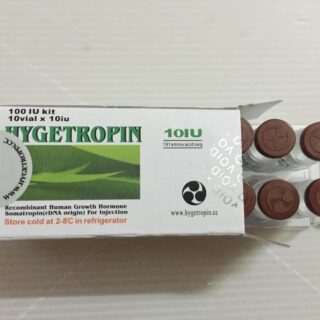 Buy HYGETROPIN 100iu
$130.00
Buy HYGETROPIN 100iu
$130.00
-
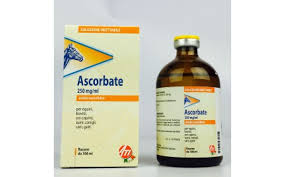 Buy Ascorbate 100mg
$60.00
Buy Ascorbate 100mg
$60.00
-
 Biosal injection
$40.00
Biosal injection
$40.00
-
 Boldenone For Horses
$45.00
Boldenone For Horses
$45.00
On Sale
-
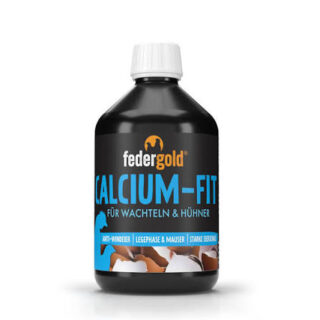 Federgold Calcium-Fit 500ml
Original price was: $25.00.$20.00Current price is: $20.00.
Federgold Calcium-Fit 500ml
Original price was: $25.00.$20.00Current price is: $20.00.
-
 De Patagoon Soft Acid IV+ For Sale Online
Original price was: $50.00.$40.00Current price is: $40.00.
De Patagoon Soft Acid IV+ For Sale Online
Original price was: $50.00.$40.00Current price is: $40.00.
-
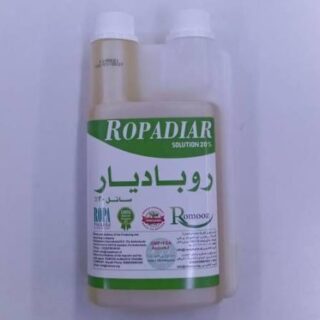 Buy ropadiar solution 20%
Original price was: $120.00.$100.00Current price is: $100.00.
Buy ropadiar solution 20%
Original price was: $120.00.$100.00Current price is: $100.00.
-
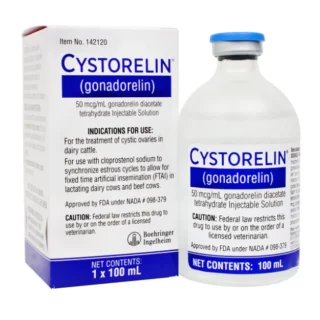 Cystorelin for cows
Original price was: $60.00.$50.00Current price is: $50.00.
Cystorelin for cows
Original price was: $60.00.$50.00Current price is: $50.00.
-
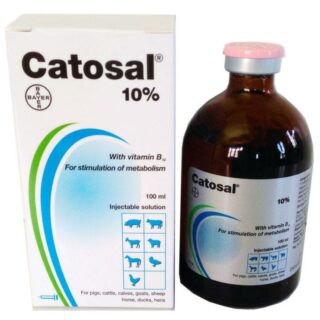 Catosal for horses
Original price was: $60.00.$50.00Current price is: $50.00.
Catosal for horses
Original price was: $60.00.$50.00Current price is: $50.00.